- Home
- Shoulder Pain Diagnosis
- Pain Lifting Arm
Shoulder Pain When Lifting Arm: Why Does It Hurt?
Written By: Chloe Wilson BSc (Hons) Physiotherapy
Reviewed By: SPE Medical Review Board

Shoulder pain when lifting your arm is a common problem, and the particular movement that causes your pain can give us useful clues about what is going on.
You may feel pain as soon as you start lifting your arm, or only when you reach shoulder height or lift it above your head. You might also find that lifting forwards is painful, while lifting out to the side is worse.
In this guide, we'll look at the common causes of shoulder pain when lifting your arm, how the different patterns of pain can help narrow down the cause and what you can do to treat it.
What Causes Shoulder Pain When Lifting Arm?
Shoulder pain when lifting your arm is usually caused by something being:
- Torn: e.g. rotator cuff tear
- Inflamed: e.g. tendonitis or frozen shoulder
- Getting Stuck or Pinched: e.g. impingement syndrome
The most common causes of shoulder pain when lifting your arm are:
1. Shoulder Impingement Syndrome
Shoulder impingement syndrome is the most common cause of upper arm and shoulder pain when lifting your arm. Impingement syndrome is where one or more of the soft tissues repeatedly gets pinched or trapped which leads to inflammation and tearing.
Common symptoms of shoulder impingement syndrome include:

- Sharp Shoulder Pain: when lifting arm above head or behind back
- Painful Arc: no pain lifting the arm up initially, but pain gets gradually worse as you raise the arm towards shoulder height. Worsening pain lifting arm above head, although pain may reduce at the top part of the movement
- Shoulder Pain When Lifting Objects: worse with heavier items and when lifting above shoulder height
Impingement syndrome is usually caused by:
- Repetitive Overhead Activities or Heavy Lifting: e.g. racket sports, DIY. Most common in those under 40
- Bone Spurs: which reduce space resulting in friction on the soft tissues. Most common in those over 40
Shoulder impingement is often linked with:
- Supraspinatus Tendonitis: which causes shoulder pain when lifting arm out to the side
- Shoulder Bursitis: inflammation of the subacromial bursa which causes shoulder pain lifting arm above head
Full Article: Shoulder Impingement Syndrome - Causes, Symptoms & Treatment
2. Rotator Cuff Tears
Another common cause of shoulder pain when lifting your arm is damage to one of the rotator cuff tendons. The rotator cuff is a group of four muscles that surround the shoulder joint.
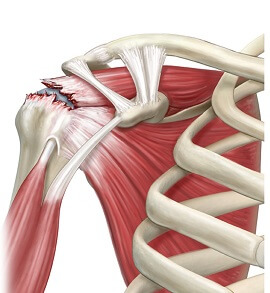
Rotator cuff tears may be caused by:
- Sudden Injury: e.g. fall onto an outstretched arm or awkward heavy lifting
- Gradual Wear & Tear: from repetitive friction with overhead activities, age-related changes and poor posture
Typical symptoms of rotator cuff tears are:
- Shoulder Pain When Raising Arm: away from the body
- Arm Weakness: often accompanies shoulder pain lifting arm up. With a complete tear (rupture) you may find you can’t lift arm at all
- Crepitus: clicking, popping, grinding noises with arm movement
Full Article: Torn Rotator Cuff - Causes, Symptoms & Treatment
3. Frozen Shoulder
Another possible cause of shoulder pain when lifting your arm is a frozen shoulder aka adhesive capsulitis. This is where there is inflammation and thickening of the joint capsule, a bag-like structure that surrounds the shoulder joint.

A frozen shoulder goes through three stages:
- Stage 1: increasing shoulder pain when lifting or twisting the arm
- Stage 2: Pain begins to improve but increasing stiffness in shoulder until you can’t lift your arm above your head or put it behind your back
- Stage 3: Stiffness gradually resolves until you make a full recovery
A frozen shoulder typically affects people aged 40-70 and is more common in women than men. The cause of adhesive capsulitis is often unknown but may be linked to previous shoulder injuries, surgery or medical conditions such as diabetes.
Full Article: Frozen Shoulder – Causes, Symptoms & Treatment
Other Causes of Pain When Lifting Arm
There are a few other more unusual conditions that can cause shoulder pain when lifting your arm:
- Brachial Neuritis: inflammation of the nerves at the top of the shoulder in the brachial plexus
- Shoulder Fractures: such as a proximal humerus fracture or broken collar bone
- Labrum Tears: damage to the ring of cartilage that surrounds the shoulder socket. Upper labrum damage is called a SLAP tear and lower labrum damage is known as a Bankart Lesion
- Dislocated Shoulder: where the upper arm pops out of the shoulder socket
Treatment For Shoulder Pain When Raising Arms
If your shoulder hurts when lifting your arm, don't despair. There are lots of things you can do to help reduce shoulder pain when raising your arm, and to regain flexibility if you can’t lift your arm, depending on the underlying cause.
Treatment for shoulder pain when lifting arms usually consists of:
- Medication: to reduce pain and inflammation
- Strengthening Exercises: to improve shoulder strength, control and positioning
- Scapular Stabilizing Exercises: to improve shoulder stability and positioning
- Arm Stretches: to increase flexibility and range of motion
- Upper Back Stretches: to improve mobility and posture
- Physical Therapy: may involve a combination of joint mobilisations, rehab programme, ultrasound and acupuncture
- Corticosteroid Injections: to reduce pain and inflammation
- Surgery: for more severe injuries, conditions that fail to settle with non-surgical treatment and for bony abnormalities
The main aims of treatment for shoulder pain when lifting arms are to:
- Reduce Pain: in the shoulder and upper arm
- Improve Shoulder Mobility: and regain full range of motion
- Regain Arm Function: get back to doing what you love
- Prevent Recurrence: address the underlying cause so that the problem doesn’t return in the future
Frequently Asked Questions
1. Why does my shoulder hurt when I lift my arm?
1. Why does my shoulder hurt when I lift my arm?
The most common causes are rotator cuff problems, shoulder bursitis and shoulder impingement, particularly if the pain is worse as you raise your arm. If your shoulder is also becoming increasingly stiff, frozen shoulder becomes more likely.
Sudden shoulder pain and weakness after an injury raises more concern about a rotator cuff tear. The exact movement that hurts, where you feel the pain and whether you have weakness or stiffness can help narrow down which problem is most likely.
2.
Why does my shoulder hurt when I lift my arm sideways?
2. Why does my shoulder hurt when I lift my arm sideways?
Pain when lifting your arm out to the side is particularly common with rotator cuff-related shoulder pain, including supraspinatus tendonitis problems and subacromial bursitis. You may notice a painful arc, where the shoulder hurts through the middle part of the movement but feels easier again once your arm is fully raised.
If the pain is more when you lift your arm across your body, the most likely culprit is a collarbone problem at the AC joint between the clavicle and the shoulder.
If you have significant weakness, with or without pain, a rotator cuff tear becomes more of a consideration, particularly following an injury.
3.
Why does my shoulder hurt when I lift my arm above my head?
3. Why does my shoulder hurt when I lift my arm above my head?
Pain when reaching overhead is commonly caused by rotator cuff-related pain, bursitis and shoulder impingement. These problems tend to become more painful when the arm is repeatedly raised above shoulder height, particularly with activities such as painting, swimming, throwing or lifting.
If overhead movement is becoming progressively restricted rather than simply painful, a frozen shoulder is another possibility. Pain following a significant injury, particularly with weakness, needs assessment for a possible rotator cuff tear or other injury.
4.
Why does my shoulder hurt when I lift my arm forwards?
4. Why does my shoulder hurt when I lift my arm forwards?
Pain when raising your arm forwards can come from several structures, but rotator cuff problems and biceps tendon problems are common causes. Biceps tendon pain is usually felt at the front of the shoulder and may be aggravated by lifting, reaching or carrying. Rotator cuff pain is often felt around the outer shoulder or upper arm.
If lifting forwards is painful because the shoulder has become generally stiff, rather than simply painful, frozen shoulder should also be considered.
5.
What does it mean if I can't lift my arm?
5. What does it mean if I can't lift my arm?
If you can't lift your arm because it is too painful, this can occur with conditions such as bursitis and rotator cuff problems. If you can't lift it because of stiffness, it is often due to a frozen shoulder.
If you suddenly cannot lift the arm because it feels genuinely weak, particularly after a fall, awkward movement or heavy lifting, a significant rotator cuff tear is a concern.
A fracture or dislocated shoulder can also prevent normal movement after an injury. Sudden loss of movement or strength should be assessed promptly.
6. What causes sharp shoulder pain when lifting my arm?
6. What causes sharp shoulder pain when lifting my arm?
A sharp pain during a particular part of the movement commonly comes from irritated tissues around the shoulder being compressed or loaded. Rotator cuff-related pain, bursitis and problems affecting the biceps tendon can all cause this pattern.
A sharp pain immediately following a fall or other significant injury raises different possibilities, including a fracture, dislocation or rotator cuff tear. Where the pain occurs and exactly when it catches during the lifting movement are particularly useful clues. Find out more in the Sharp Pain In Shoulder section.
7.
When should I get shoulder pain when lifting my arm assessed?
7. When should I get shoulder pain when lifting my arm assessed?
If your shoulder pain is mild and improving, you can often start with activity modification and appropriate self-care such as relative rest, ice, medication and exercises.
However, I would get it assessed if the pain is severe, worsening, persistent or significantly restricting your movement. Urgent review is particularly important after a significant injury, if you suddenly cannot lift your arm, have marked weakness or if there is associated shortness of breath or chest pain.
Numbness or tingling extending down the arm can also indicate that the neck or nerves are involved rather than the shoulder alone.
8. Can shoulder pain when lifting my arm get better on its own?
8. Can shoulder pain when lifting my arm get better on its own?
Yes, many common causes of shoulder pain with lifting settle with the right combination of activity modification, pain relief and rehabilitation exercises. Rotator cuff-related pain and mild tendon irritation often respond well to progressive strengthening.
However, simply resting the shoulder indefinitely isn't usually the best approach. If your pain isn't improving, keeps returning or you are losing movement or strength, getting the shoulder assessed can help identify the underlying problem and make sure you are doing the right exercises.
What Else Can Help?
Shoulder pain when lifting your arms up is a common problem that can usually be treated at home with a combination of exercises, medications and activity modification.
If symptoms fail to improve after 6 months of treatment, then surgery may be advised, most typically a subacromial decompression to open up the space and reduce the friction on the soft tissues which really helps to reduce shoulder pain lifting the arm above your head.
Shoulder pain when lifting the arm is often linked with age:
- Under 40’s: most typically rotator cuff tear or tendonitis
- Over 40’s: most typically a frozen shoulder or shoulder impingement syndrome
It is really important to know what is causing your shoulder pain when lifting your arm, so if you’re still not sure what is wrong, check out the shoulder pain diagnosis guide for help working out what is wrong. You may also be interested in the following articles:
- Upper Arm Pain
- Burning Shoulder Pain
- Shoulder Pain At Night
- Sharp Shoulder Pain
- Shoulder Clicking
- Trigger Points
- Pain From Shoulder To Hand
Related Articles

Shoulder Problems
January 29, 2026
Shoulder Diagnosis
September 23rd, 2026

Rehab Exercises
October 7, 2026
Page Last Updated: September 24th, 2026
Next Review Due: September 24th, 2028

Visitor Comments
"Such an informative and valuable site. Clearly written and matches the guidance from my orthopedic surgeon. Even offers many rehab exercises. Thank you very much!" Izabela
"I am a massage therapist and found your website perfect. Very useful. Clear, easy understand. Big help. Thank you!" Viktoria
"This is a great site. Very informative" Marilyn
"I benefited a lot from your distinguished work, thank you." Sayed
"Hi
and thanks so much, great site! You
are doing a lot of good in the world with this helpful site, thanks again." Karen
The material on this website is intended for educational information purposes only. It should not delay or substitute medical advice, diagnosis or treatment. See our T&C's
Shoulder-Pain-Explained.com is a trading name of Wilson Health Ltd. All rights reserved. Terms & Conditions apply
© shoulder-pain-explained.com 2015-26 Last updated 12th October 2026
Contact Us About Us Blog Privacy Policy Advertising Policy Sitemap
