- Home
- Wrist Pain Diagnosis
- Wrist Lumps
Lump On Wrist
Written By: Chloe Wilson BSc (Hons) Physiotherapy
Reviewed By: SPE Medical Review Board
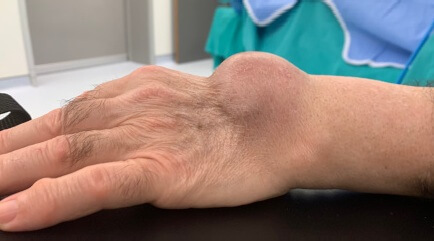
A lump on the wrist is a common problem that can affect people at any age.
Finding a lump on your wrist can be alarming, but in most cases, these lumps are harmless. They can vary in size, firmness, and whether they cause pain.
Some wrist lumps develop due to injury, inflammation, or underlying medical conditions. Some are caused by fluid-filled sacs, while others result from bone growth, soft tissue changes, or underlying joint conditions. While many lumps are benign, some may require medical evaluation and treatment.
In this article we will explore the most common causes of wrist lumps, how to identify them, other possible conditions, diagnosis, and the different treatment options.
What Causes Wrist Lumps?
There are several reasons why a lump might form on the wrist. We’ll start by looking at the most common causes of wrist lumps and the causes and symptoms of each, and then go on to look at some of the less common causes of a bump on the wrist.
1. Ganglion Cyst
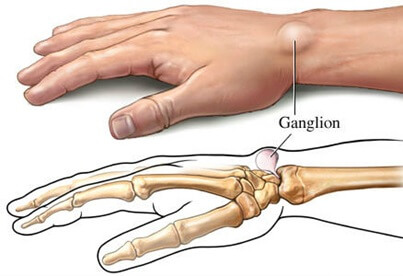
The most common cause of a lump on the wrist or hand is a ganglion cyst, accounting for over 50% of all hand and wrist lumps.
A ganglion is a fluid-filled sac that typically forms near a joint or tendon, most often appearing on the back of the wrist but sometimes on the palm side. Ganglions are filled with joint fluid that has collected in a pouch.
The exact cause of ganglion cysts is not always known, but they are often linked to repetitive wrist movements, joint irritation, or previous wrist injuries. Some people develop them spontaneously without any apparent reason.
Common symptoms of wrist ganglions include:
- A round or oval, moveable lump on wrist that may feel soft or firm
- The size of the cyst may fluctuate over time
- The wrist lump is usually painless but can cause discomfort if it presses on a nearby nerve
- Possible interference with wrist movement
Find Out More: Ganglion Cyst Wrist
2. Wrist Fracture
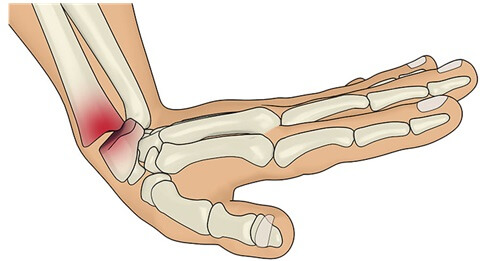
A wrist fracture, whether recent or old, can lead to a noticeable bump on the wrist.
This may be due to bone misalignment, swelling, or callus formation during the healing process.
Wrist fractures typically occur from falls onto an outstretched hand, high-impact trauma (such as sports injuries or car accidents), or in individuals with osteoporosis, where bones are more fragile.
The most common types of wrist fracture are distal radius fractures of the outer forearm bone, and scaphoid fractures of one of the small hand bones at the base of the thumb.
Common symptoms of wrist fractures may include
- Significant pain, tenderness, and swelling around the affected area
- Obvious deformity at the time of injury
- Bruising and stiffness in the wrist
- Difficulty moving the wrist
- On-going hard bump on wrist may be present months after injury from improper bone healing
Find Out More: Wrist Fractures
3. Giant Cell Tumor
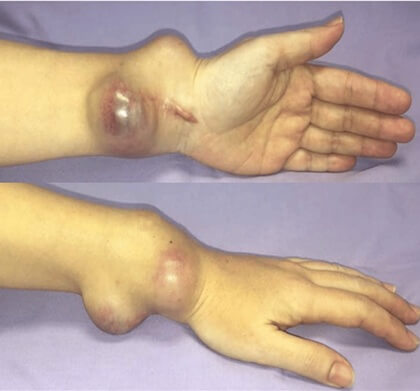
A giant cell tumor is a noncancerous (benign) but firm mass that develops in the tissue surrounding wrist tendons, known as the tendon sheath.
It tends to grow slowly and can be found on the wrist or hand.
The cause of these tumors is not well understood, but repetitive movement or minor trauma may contribute to their formation, and there may be a genetic link.
Common symptoms of a wrist mass from a giant cell tumor include:
- A firm, slow-growing lump. Average size 1.5cm diameter
- Usually painless but may cause discomfort if pressing on nearby structures
- Often attached to one or the wrist tendons or soft tissues. Most common on the palm side
- Most commonly affects adults aged 30-50 and more prevalent in women than men
4. Epidermoid Cyst
An epidermoid cyst, aka inclusion cyst, is a benign cyst that develops when skin cells become trapped beneath the surface, forming a small, enclosed sac.
These cysts often develop due to skin trauma e.g. a deep cut, with excess keratin forming around the injury as a protective mechanism that gradually expands into a cyst. They may also develop due to blocked hair follicles or sebaceous gland obstructions. An epidermoid cyst lump on the wrist is usually completely harmless and doesn’t require any treatment unless they become infected.
Common symptoms of an epidermoid cyst are:
- A round, small, and firm lump under the skin
- Typically painless unless infected
- Infected cysts may become red, swollen, and tender
- May release a thick, yellowish fluid if ruptured
5. Carpal Boss
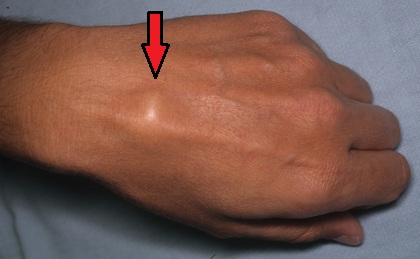
A hard lump on the back of the wrist may be due to a Carpal Boss, which is similar to a bone spur.
A Carpal boss is a bony lump that forms on the back of the wrist where the metacarpal bones meet the carpal bones. The lump is a result of excess bone growth in the wrist.
A carpal boss develops due to overuse, repetitive strain, arthritis, or genetic predisposition and is often mistaken for a ganglion cyst. The more commonly occur in the dominant hand.
Common symptoms of a carpal boss include:
- A hard, immovable lump on the back of the wrist, usually at the base of the index or middle finger
- Pain with certain wrist movements
- Possible irritation from rubbing against objects e.g. a watch or bracelet
Find Out More: Carpal Boss
6. Dupuytren’s Contracture

A firm lump in your palm, near the wrist, may be due to Dupuytren’s Contracture.
Dupuytren’s is a condition that causes thickening of the fascia (connective tissue) in the palm, sometimes leading to nodules or lumps near the wrist.
The exact cause of Dupuytren's is unclear, but genetic predisposition and chronic inflammation are believed to play a role.
Typical symptoms of Dupuytren’s contracture include:
- Firm nodules or lumps in the palm extending toward the wrist, usually at the base of the ring or pinky finger
- Progressive tightening of fingers into a bent position
- Dupuytren’s lumps are initially painless but may interfere with hand function over time
Find Out More: Dupuytren Contracture
Other Causes of Wrist Lumps
In addition to the common causes listed above, other conditions may also lead to lumps on the wrist. These lumps can vary in appearance and severity.
- Enchondroma: A benign cartilage tumor inside the bone, creating a hard lump. Typically painless but can lead to hand or wrist fractures.
- Rheumatoid Arthritis (RA): Causes firm, tender nodules near joints, just underneath the skin, often accompanied by joint swelling and stiffness. Rheumatoid wrist lumps typically develop in both hands at the same time
- Gout: A type of arthritis where uric acid crystals can develop in joints. Leads to swollen, painful lumps, called tophi that are red and warm to the touch, usually appearing suddenly
- Foreign Body: A wrist lump may form due to an embedded splinter or small object, leading to localized swelling and tenderness
- Lipoma: A soft, fatty lump under the skin that is typically painless, movable, and slow-growing
- Wart or Callus: A rough, thickened skin lump due to friction or a viral infection, often found on pressure points, which may resemble a cauliflower
- Trigger Finger Nodule: A small, thickened lump near a tendon, usually on the palm, that may cause clicking or locking when moving a finger or thumb
- Aneurysm: a rare swelling of the radial or ulnar artery, often causing pulsating sensation and numbness
- Cancerous Tumor: Though rare, malignant lumps in the wrist and hand are usually firm, rapidly growing, and may be painful with associated skin changes. The most common types of cancerous lump on wrist are chondrosarcoma (type of bone cancer), soft tissue sarcoma (in soft tissue), non-Hodgkin lymphoma (slow growing) and squamous cell carcinoma (scaly red patch)
Diagnosing Bump On Wrist
If you have a lump on your wrist, a proper diagnosis is essential to determine the underlying cause. Your doctor will evaluate the wrist bump through a combination of physical examination and imaging tests.
The doctor will start by asking you about your symptoms such as when you first notice the lump on your wrist, how it has changed over time, any injuries to the area and other medical conditions.
They will then carry out a physical examination which will include assessing the size, firmness, and mobility of the wrist lump. You may then be sent for further investigations such as:
- X-ray: Checking for bony growths or fractures
- Ultrasound: Differentiating cysts from solid masses
- MRI or CT Scan: Detailed imaging for deeper or complex lumps
- Biopsy: If malignancy is suspected, a tissue sample may be taken for analysis
When to See a Doctor
While many wrist lumps are harmless, seek medical attention if:
- The wrist lump is growing rapidly
- There is persistent pain or tenderness
- The lump is red, warm, or leaking fluid
- Wrist movement is restricted
- You have a history of cancer
- You have any tingling, numbness or weakness in the hand
Differential Diagnosis
Thinking about the size, location and feel of a wrist lump can help you identify wat type of lump it is:
- Big Lump On Wrist: ganglion cyst, wrist fracture, giant cell tumor, RA, gout
- Small Bump On Wrist: ganglion cyst, epidermoid cyst, carpal boss, Dupuytren’s
- Bump On Top Of Wrist: (back of the hand) ganglion, Colles fracture, epidermoid cyst, carpal boss
- Bump On Bottom Of Wrist: (palm side) ganglion cyst, Smith's fracture, giant cell tumor, epidermoid cyst, Dupuytren’s contracture, trigger finger nodule
- Bump On Wrist After Fall: wrist fracture
- Hard Bump On Wrist: wrist fracture, carpal boss, Dupuytren’s, enchondroma
- Bump On Inside Of Wrist: (pinky side) ganglion cyst, ulna fracture, epidermoid cyst, Dupuytren’s
- Bump On Outside Of Wrist: (thumb side) ganglion cyst, distal radius fracture, Barton fracture, scaphoid fracture, epidermoid cyst
- Painful Lump On Wrist: wrist fracture, carpal boss
- Bump On Wrist Not Painful: ganglion cyst, giant cell tumor, epidermoid cyst, Dupuytren’s, lipoma
- Itchy Red Bumps On Wrist: allergic reaction, eczema, scabies, psoriasis, squamous cell carcinoma
- Lump On Fingers or Thumb: trigger finger
Treatment For Wrist Lumps
Treatment depends on the underlying cause of the lump. Some conditions may resolve on their own, while others require medical intervention.
Conservative Treatments
- Observation: Many benign lumps, like ganglion cysts, may resolve on their own without treatment, so a watch and wait approach may be recommended
- Immobilization: Wearing a wrist brace can help prevent irritation and reduce inflammation, particularly in conditions like carpal boss or ganglion cysts
- Aspiration: A needle can be used to drain fluid from a cyst, but there is a high risk of recurrence
- Medication: Anti-inflammatory medications such as ibuprofen or corticosteroids can help reduce pain and swelling in cases of RA, gout, or tendon-related lumps
- Physical Therapy: Specific exercises and stretches can improve wrist mobility, function and strength, particularly for post-injury recovery and Dupuytren’s contracture
Medical and Surgical Treatments
Steroid Injections: Can help reduce inflammation and pain. Particularly useful for RA, trigger finger or ganglion cysts
- Surgical Removal: Recommended for persistent, painful, or growing wrist lumps such as carpal boss or giant cell tumors. The recurrence rate is often high e.g. 50% for giant cell tumors, 40% for ganglion cysts
- Antibiotics: Used for treating lumps caused by infections or abscesses
- Cancer Treatment: If a malignant tumor is diagnosed, treatment may include surgery, radiation, or chemotherapy.
Lump On Wrist Summary
A lump on the wrist can arise from various causes, ranging from benign cysts to underlying medical conditions. Ganglion cysts are the most common cause of wrist bumps and are usually harmless, though they may cause discomfort.
Other causes of lumps on the wrist include bone-related growths, soft tissue tumors, and inflammatory conditions.
Diagnosis is crucial in determining the appropriate treatment of wrist bumps, which can range from simple observation and conservative management to medical or surgical interventions. If you notice a persistent, painful, or growing lump in your wrist, seeking medical advice ensures timely and appropriate care.
You may also be interested in the following articles:
- Wrist Pain Chart
- Inner Wrist Pain
- Outer Wrist Pain
- Lump On Back Of Hand
- Wrist Tendonitis
- Carpal Tunnel Syndrome
- Forearm Pain
Related Articles

Upper Arm Pain
March 11, 2026
Shoulder Diagnosis
September 23rd, 2026
Elbow Diagnosis
February 26, 2026
Medical & Scientific References
- Ganglion Cysts Of The Wrist: Pathophysiology, Clinical Picture, And Management. Current Reviews In Musculoskeletal Medicine
- Giant Cell Tumor Of Tendon Sheath In The Hand: Analysis Of Risk Factors For Recurrence In 50 Cases. BMC Musculoskeletal Disorders
- MRI Of A Painful Carpal Boss: Variations At The Extensor Carpi Radialis Brevis Insertion And Imaging Findings In Regional Traumatic And Overuse Injuries. Skeletal Radiology Journal.
Page Last Updated: May 14th, 2026
Next Review Due: May 14th, 2028

Visitor Comments
"Such an informative and valuable site. Clearly written and matches the guidance from my orthopedic surgeon. Even offers many rehab exercises. Thank you very much!" Izabela
"I am a massage therapist and found your website perfect. Very useful. Clear, easy understand. Big help. Thank you!" Viktoria
"This is a great site. Very informative" Marilyn
"I benefited a lot from your distinguished work, thank you." Sayed
"Hi
and thanks so much, great site! You
are doing a lot of good in the world with this helpful site, thanks again." Karen
The material on this website is intended for educational information purposes only. It should not delay or substitute medical advice, diagnosis or treatment. See our T&C's
Shoulder-Pain-Explained.com is a trading name of Wilson Health Ltd. All rights reserved. Terms & Conditions apply
© shoulder-pain-explained.com 2015-26 Last updated 30th September 2026
Contact Us About Us Blog Privacy Policy Advertising Policy Sitemap
