- Home
- Wrist Pain Diagnosis
- Dupytren Contracture
Dupuytren Contracture
Written By: Chloe Wilson BSc (Hons) Physiotherapy
Reviewed By: SPE Medical Review Board
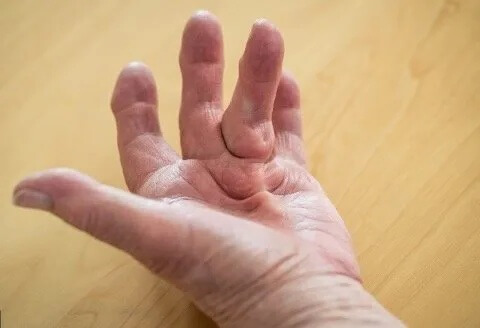
Dupuytren contracture is a common condition that causes the fingers to curl inwards. Over time, this can make it difficult to straighten the hand.
Dupuytren’s develops slowly over time and is caused by abnormal thickening and tightening of tissue in the hand.
Although the contracture is not usually painful, it can significantly affect hand function, grip strength, and everyday activities such as shaking hands, typing, or leaning through your hand.
In this guide, I’ll explain what Dupuytren contracture is, what causes it, the typical symptoms and stages, how it is diagnosed, and the full range of Dupuytren contracture treatment options, from observation and injections to surgery and physical therapy.
What Is Dupuytren Contracture?
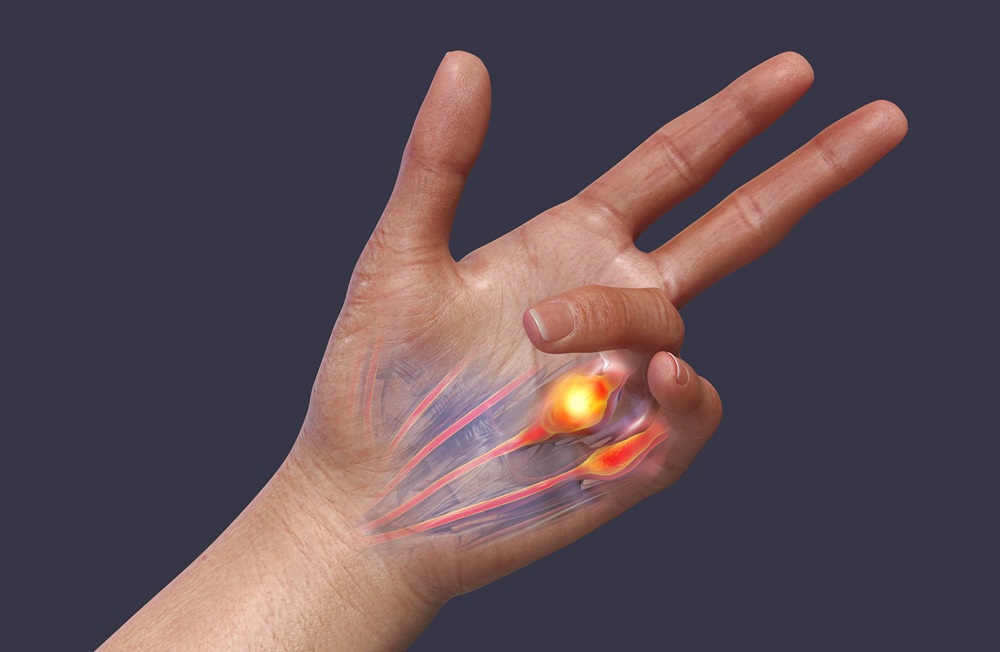
Dupuytren contracture, also known as Dupuytren disease or Dupuytren’s contracture, is when the connective tissue beneath the skin of the palm (the palmar fascia) thickens and tightens.
Small nodules form and, in some cases, extend to create tight cords within the fascia.
Over time this causes the fingers, most commonly the ring finger and little finger, to bend inwards and lose the ability to fully straighten.
A similar condition can also develop in the feet, known as plantar fibromatosis.
Dupuytren Contracture Stages
Dupuytren contracture typically progresses through several stages:
- Early Stage: Small, firm lumps called Dupuytren nodules develop in the palm. These may feel tender initially.
- Progressive Stage: Thickened cords form under the skin, extending into the fingers.
- Contracture Stage: One or more fingers become permanently bent and cannot be straightened fully.
Not everyone progresses through all stages, and some cases remain mild for many years.
What Causes Dupuytren Disease?
The exact cause of Dupuytren contracture is not fully understood, but it is believed to be link to a combination of genetic and biological factors.
Dupuytren disease occurs when there is abnormal collagen production in the palmar fascia, causing it to thicken and shorten. This leads to the formation of nodules and cords that pull the fingers into a bent position.
Common Dupuytren contracture causes and risk factors include:
- Genetics: Strong family history (especially Northern European ancestry)
- Age: More common after age 40
- Sex: Affects men more often than women
- Diabetes
- Smoking and/or alcohol use
- Epilepsy and anti-seizure medication
- Manual work or vibration exposure: may worsen progression, but does not directly cause it
Dupuytren contracture is not caused by hand overuse, typing, or repetitive strain, although these activities may draw attention to existing symptoms. It can occur in one or both hands at the same time.
Dupuytren Contracture Symptoms
Symptoms of Dupuytren contracture usually develop gradually, worsening slowly over months and years.
Common symptoms include:
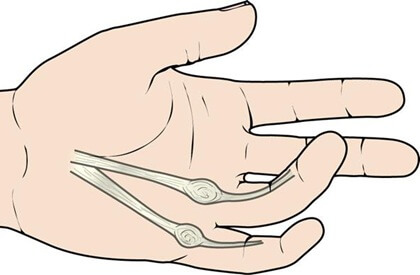
- Small, firm lumps in the palm (Dupuytren nodules)
- Thick cords under the skin
- Fingers gradually bending towards the palm
- Difficulty straightening fingers
- Reduced grip and hand function
- Trouble placing the hand flat on a surface
Pain is usually minimal, although nodules can be tender and cause itching, burning or aching sensations in the early stages.
Diagnosing Dupuytren's Contracture
Dupuytren contracture is usually diagnosed through clinical examination, without the need for imaging. A healthcare professional will assess:

- Finger position and movement
- Presence of nodules or cords
- Special tests e.g. tabletop test
The tabletop test is positive when a person is unable to place their hand flat on a table, which is a common sign of Dupuytren contracture.
When To See A Doctor
You should see a healthcare professional if:
- One or more fingers are becoming increasingly difficult to straighten
- You can no longer place your hand flat on a table
- The contracture is starting to interfere with daily activities such as gripping, writing, or self-care
- You notice rapid progression or new cords forming
- You are unsure whether symptoms are caused by Dupuytren contracture or another hand condition
Early assessment helps confirm the diagnosis and ensures treatment options are discussed at the most appropriate time. There are lots of other possible causes of a lump in the palm of the hand.
Trigger Finger vs Dupuytren Contracture
Trigger finger and dupuytren contracture are often confused but are actually very different conditions:
Trigger Finger vs Dupuytren Contracture: Key Differences
| Trigger Finger | Dupuytren Contracture |
|---|---|
| Finger locks or clicks | Finger gradually bends over time |
| Affects the flexor tendons | Affects the palmar fascia (connective tissue) |
| Painful snapping or catching sensation | Usually painless tightening |
| Finger can usually be fully straightened | Finger cannot be fully straightened |
Correct diagnosis is important, as treatment differs significantly.
Dupuytren Contracture Treatment
There is no cure for Dupuytren disease, but treatment can slow progression and improve finger movement when contracture becomes functionally limiting.
Treatment is indicated for Dupuytren's contracture when:
- Finger bending interferes with daily activities
- Finger cannot be straightened beyond a certain angle
- Hand function is declining
and typically involves:
1. Observation
In mild cases with minimal finger bending, no treatment may be required. Many people live with early Dupuytren contracture for years without intervention.
2. Dupuytren Injection
Dupuytren injections may be used when cords are present:
- Collagenase injections break down the cord
- Steroid injections can help soften and flatten hard Dupuytren nodules
- Finger is manipulated afterwards to release the contracture
- Minimally invasive, with a shorter recovery than surgery
Steroid injections may help reduce painful nodules in early stages but do not reverse contracture.
3. Needle Fasciotomy (Percutaneous Needle Fasciotomy)
A needle fasciotomy is another minimally invasive treatment for Dupuytren contracture.
- A small needle is used to puncture and weaken the cords under the skin.
- The finger is the gently straightened to release the contracture.
- It is performed under local anaesthetic, usually in a clinic setting.
- Recovery is quicker than open surgery, but recurrence rates are higher
Needle fasciotomy is often suitable for people with single or moderate cords, especially in the early to middle stages of Dupuytren disease.
4. Dupuytren Contracture Physical Therapy
Physical therapy does not cure Dupuytren contracture, but it plays an important role, particularly after procedures.
Dupuytren contracture physical therapy may include:
- Stretching and mobility exercises
- Scar management
- Splinting after procedures
- Strengthening and functional retraining
Dupuytren’s contracture exercises are most useful after injections, fasciotomy or surgery, rather than as a standalone treatment.
5. Dupuytren Contracture Surgery
Dupuytren’s contracture surgery is recommended for moderate to severe contractures that affect hand function. Surgery aims to straighten the fingers, but it cannot completely eradicate the disease and further contractures may develop in the future.
Surgical options include:
- Fasciotomy: removal of diseased fascia
- Dermofasciectomy: removal of fascia and overlying diseased skin, followed by a skin graft (lower recurrence risk)
Dupuytrens surgery has the highest success rate but also the longest recovery time.
Recovery Process
Recovery depends on the treatment method:
- Injections: return to normal activities within days to weeks. Temporary swelling and bruising are common
- Needle Fasciotomy: light activities within a few days, with minimal pain and swelling. Stretching, splinting, and hand therapy be recommended to regain and maintain finger extension
- Surgery: recovery may take several weeks to months
After Dupuytren contracture surgery or fasciotomy, hand therapy is often required to:
- Restore finger movement
- Reduce stiffness
- Manage scarring
- Prevent recurrence
- Improve strength and function
Recurrence is possible with all treatments, but proper rehabilitation and ongoing exercises can help reduce long-term stiffness.
FAQs On Duputren's Contracture
Here are answers to some of the most frequently asked questions about Dupuytren contracture.
Is Dupuytren contracture serious?
Is Dupuytren contracture serious?
Dupuytren contracture is not dangerous or life-threatening, but it can become functionally limiting. In more advanced cases, finger contracture can significantly affect hand use, grip strength, and independence in daily tasks.
Can Dupuytren contracture go away on its own?
Can Dupuytren contracture go away on its own?
No, Dupuytren contracture does not usually resolve on its own. In some people it remains mild for many years, while in others it slowly progresses over time.
Is Dupuytren contracture painful?
Is Dupuytren contracture painful?
Dupuytren contracture is usually painless. Some people experience tenderness or discomfort in the early stages when nodules first develop, but pain is not a prominent feature of the condition.
Do Dupuytren contracture exercises actually work?
Do Dupuytren contracture exercises actually work?
Exercises cannot cure Dupuytren contracture or stop disease progression. However, they can help maintain finger mobility and are particularly useful after treatments such as injections, needle fasciotomy, or surgery.
How fast does Dupuytren contracture progress?
How fast does Dupuytren contracture progress?
Progression varies widely. Some people notice very slow changes over decades, while others experience more rapid progression over a few years. It is not possible to reliably predict how quickly the condition will worsen.
Can Dupuytren contracture come back after treatment?
Can Dupuytren contracture come back after treatment?
Yes. Recurrence is possible after all treatments, including injections, needle fasciotomy, and surgery. Ongoing monitoring and hand therapy can help reduce stiffness and maintain function.
Is Dupuytren disease hereditary?
Is Dupuytren disease hereditary?
Yes, Dupuytren disease is strongly hereditary with many people having a family history of the condition, particularly among those of Northern European descent. Research suggests a genetic predisposition affects how connective tissue in the palm thickens over time. However, inheriting the genes does not guarantee you will develop Dupuytren contracture, environmental and medical factors also play a role.
Dupuytren Disease Summary
Dupuytren contracture is a progressive hand condition caused by abnormal thickening of tissue in the palm, leading to finger bending, reduced hand function and a lump in the palm of the hand.
Also known as Dupuytren disease or Dupuytren’s disease, it develops gradually and is strongly linked to genetics.
Early symptoms include Dupuytren nodules, while advanced stages result in permanent finger contracture. Diagnosis is usually clinical and must be distinguished from conditions such as trigger finger.
Dupuytren contracture treatment ranges from observation and injections to physical therapy and surgery. While there is no cure, timely intervention can significantly improve hand function and quality of life.
You may also be interested in the following articles:
- Lump On Hand Guide
- Mallet Finger
- De Quervain Tenosynovitis
- Carpal Tunnel Syndrome
- Wrist Tendonitis
- Scaphoid Fracture
Related Articles
Shoulder Diagnosis
February 25th, 2026
Wrist Diagnosis
December 4th, 2025
Elbow Diagnosis
February 26, 2026
Medical & Scientific References
- Dupuytren's Disease. National Institute For Clinical Excellence (NICE)
- Dupuytren's Contracture. NHS UK
- Dupuytren's Contracture: A Review of the Literature. National Library Of Medicine, NIH
Page Last Updated: June 3rd, 2026
Next Review Due: June 3rd, 2028

Visitor Comments
"Such an informative and valuable site. Clearly written and matches the guidance from my orthopedic surgeon. Even offers many rehab exercises. Thank you very much!" Izabela
"I am a massage therapist and found your website perfect. Very useful. Clear, easy understand. Big help. Thank you!" Viktoria
"This is a great site. Very informative" Marilyn
"I benefited a lot from your distinguished work, thank you." Sayed
"Hi
and thanks so much, great site! You
are doing a lot of good in the world with this helpful site, thanks again." Karen
