- Home
- Wrist Pain Diagnosis
- Wrist Fractures
- Boxer's Fracture
Boxer's Fracture
Written By: Chloe Wilson BSc (Hons) Physiotherapy
Reviewed By: SPE Medical Review Board

A Boxer’s fracture is one of the most common hand injuries, usually caused by hitting something with a clenched fist.
It can happen during sports, falls, or everyday accidents.
Understanding what a Boxer fracture is, recognizing the common causes and symptoms, and knowing the best treatment options are crucial for preventing long-term complications and ensuring a smooth recovery.
Whether you are a sports enthusiast, recovering from an accident, or curious about hand injuries, this guide will help you understand Boxer's fractures and the steps to take for proper healing.
What Is A Boxer’s Fracture?

A Boxer’s fracture is a break in one of the small bones of the hand.
It most commonly occurs near the base of your little finger, the neck of the 5th metacarpal, near your knuckle.
It typically results from punching a hard surface at speed with a clenched fist.
People may also refer to it as a broken knuckle, or 5th metacarpal neck fracture. The injury can weaken your hand, cause pain and swelling, and make gripping objects or forming a fist difficult.
Young, adult males are the most commonly affected group accounting for approximately 95% of Boxer’s fractures.
Causes Of A Boxer’s
Fracture
A Boxer’s fracture in the hand can occur from:
- Punching hard objects: Walls, doors, or floors
- Sports injuries: Boxing, martial arts, football, or other contact sports
- Falls onto a clenched fist: Force transfers to the hand bones
- Accidental trauma: Direct impact to the hand or fingers
Note: You don’t have to be a professional boxer to sustain this injury—Boxer’s fractures are common in everyday life.
Boxer’s Fracture Symptoms

Common Boxer’s fracture symptoms include:
- Pain around the little finger or side of the hand
- Swelling and bruising near the fracture site
- Deformity, such as an angled or sunken finger
- Difficulty making a fist or gripping objects
- Tenderness to touch
Recognizing these symptoms early is crucial to ensure proper healing and reduce Boxer fracture recovery time.
Diagnosing A Boxer
Fracture
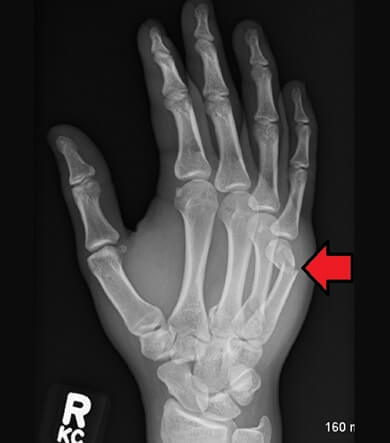
Diagnosis of a fifth metacarpal fracture typically involves:
- Medical history: Understanding the injury mechanism
- Physical examination: Checking finger alignment, swelling, and mobility
- Imaging: X-rays confirm the location, type, and angle of the fracture
A Boxer fracture split (where there is an open wound) may occur when the bone is angulated or displaced. Identifying this is important for treatment decisions and affects recovery time.
When to See a Doctor
If you suspect a fracture, it’s important to get medical attention promptly.
While mild fractures can sometimes be managed with a Boxer’s fracture splint or buddy taping, certain red flag signs indicate that you should see a doctor immediately:
- Severe deformity: Your little finger appears angled, sunken, or out of alignment
- Inability to move your finger: You cannot make a fist or bend the finger normally
- Numbness or tingling: Fingers feel pins-and-needles or lose sensation
- Pale, cold, or blue fingers: This may indicate poor circulation
- Severe or worsening pain: Pain that doesn’t improve with rest, ice, or over-the-counter medication
- Open wounds or bone visible: Suspected open fracture
Even if your symptoms seem mild, getting a proper diagnosis is essential. An X-ray can confirm whether you have a Boxer’s fracture, or another hand bone injury, and guide the correct treatment.
Early treatment not only reduces recovery time but also helps prevent long-term complications such as deformity, stiffness, or reduced grip strength.
Boxer Fracture Treatment
Boxer fracture treatment depends on the severity of the break, how much the bone has shifted, and whether the joint or surrounding tissues are involved.
The main goals of treatment are to reduce pain, allow the bone to heal in the correct position, restore hand function, and prevent long-term complications such as stiffness or deformity.
#CommissionsEarned from Amazon on qualifying purchases
Non-Surgical Treatment
Most Boxer’s fractures are stable and can be treated without surgery.
Initial Treatment
(First 48–72 Hours)
Immediately after a Boxer fracture in the hand, early management focuses on controlling pain and swelling:
- Rest: Avoid using the injured hand
- Ice: Apply an ice pack for 15–20 minutes every 2–3 hours
- Elevation: Keep the hand raised above heart level
- Pain relief: Paracetamol or anti-inflammatory medication if advised
Early management can significantly reduce swelling, which helps improve healing and shortens recovery time.
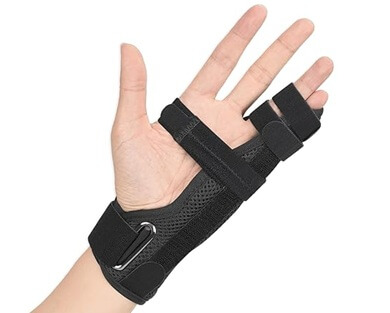
Splinting or Casting
- An ulnar gutter splint or cast is commonly used
- Immobilises the little finger and 4th–5th metacarpals
- Typically worn for 3–6 weeks
This allows the bone to heal while maintaining proper alignment.
Buddy Taping
- Used for milder Boxer fractures in hand
- The injured finger is taped to a neighbouring finger for support
- Allows limited movement while protecting the fracture
Early Hand Movement
- Gentle finger movement may be encouraged early
- Prevents stiffness and loss of grip strength
- Always guided by a clinician or physiotherapist
Non-surgical Boxer fracture treatment is highly effective when the bone is well aligned and there is no joint involvement. Most Boxer’s fractures are stable and can be treated without surgery.
Surgical Treatment
for Boxer’s Fracture
Surgery may be required if the fracture is unstable or poorly aligned.
Indications for Surgery
Surgery may be recommended if:
- The bone is severely angulated or rotated
- There is a Boxer fracture split (open wound) or displaced fracture
- The fracture extends into the joint
- Multiple metacarpals are fractured
- Non-surgical treatment fails to maintain alignment
Surgical Options
- Pins (K-wires): Temporary fixation to hold the bone in place
- Plates and screws: Used for more complex or unstable fractures
- Closed reduction: Realigning the bone without open surgery
Surgical treatment aims to restore hand anatomy, improve grip strength, and prevent permanent deformity.
Physical Therapy After a Boxer Fracture
Physiotherapy is a critical part of Boxer fracture treatment, whether managed surgically or non-surgically.
Physical therapy helps to:
- Restore finger and wrist range of motion
- Improve grip strength and coordination
- Reduce stiffness and scar tissue
- Safely return to work, sport, or manual tasks
Exercises are introduced gradually to avoid stressing the healing bone while preventing long-term stiffness. Proper physiotherapy is crucial for regaining full function and preventing future injuries.
Home Care and
Recovery Tips
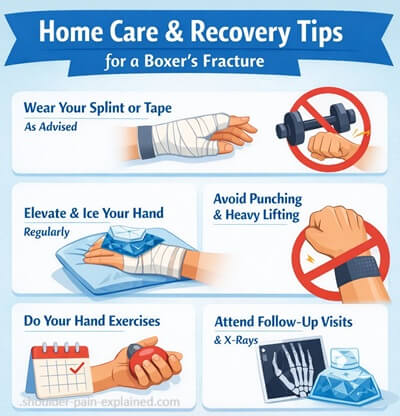
To support healing at home and ensure a full recovery:
- Wear your splint or tape as advised
- Avoid punching, gripping, or heavy lifting
- Keep the hand elevated and ice regularly
- Keep up with prescribed hand exercises
- Attend follow-up appointments and X-rays
Poor compliance can prolong healing and increase recovery time.
Boxer Fracture Recovery
Timeline
Understanding the Boxer’s fracture recovery timeline helps set realistic expectations and improves compliance with treatment.
Week 0–1: Injury
& Diagnosis
- Pain, swelling, and bruising are most noticeable
- X-ray confirms a fracture in the hand
- Splint, cast, or buddy taping applied
- Ice, elevation, and pain relief advised
Weeks 2–4: Early Healing Phase
- Swelling begins to reduce
- Bone starts to knit together
- Light finger movement may begin (if approved)
- No punching, gripping, or heavy lifting
Weeks 4–6: Functional
Recovery
- Splint or cast often removed
- Physiotherapy focuses on mobility
- Grip strength still reduced
- Most daily activities resume
Weeks 6–12: Strength
& Control
- Strengthening exercises introduced
- Sports-specific or work-specific rehab
- Surgical fractures may still be healing
3–6 Months: Full
Recovery
- Grip strength returns
- Hand function normalises
- Low risk of long-term stiffness if rehab completed
Following the correct Boxer fracture treatment plan significantly shortens recovery time and reduces complications.
How To Prevent 5th Metacarpal Fractures
Prevention is always better than cure so:
- Avoid punching hard surfaces
- Wear protective gloves in boxing or martial arts
- Strengthen hand, wrist, and forearm muscles
- Practice safe punching and impact techniques
FAQs on Boxer's Fractures
Here are answers to some of the most frequently asked questions about Boxer's fractures.
Q. What is a Boxer’s fracture?
Q. What is a Boxer’s fracture?
A Boxer’s fracture in the hand is a break in the neck of the 5th metacarpal bone, which connects to the little finger. It commonly occurs after punching a hard object.
Q. Is a Boxer’s
fracture serious?
Q. Is a Boxer’s fracture serious?
Most Boxer fractures heal well, but severe angulation, rotation, or displacement can lead to reduced grip strength or long-term stiffness if not treated properly. Severe deformity, inability to move your finger, numbness, or persistent pain are red flags.
Q. How painful is a
Boxer’s fracture?
Q. How painful is a Boxer’s fracture?
Pain varies but is usually moderate to severe initially. Pain typically improves within 1–2 weeks with proper treatment and immobilisation.
Q. Can I still move
my fingers with a Boxer fracture?
Q. Can I still move my fingers with a Boxer fracture?
Yes, but movement may be painful or limited. Gentle motion is sometimes encouraged during recovery to prevent stiffness, under professional guidance.
Q: Can a Boxer fracture
heal without surgery?
Q: Can a Boxer fracture heal without surgery?
A: Mild fractures often heal with a Boxer’s fracture splint or buddy taping but medical assessment is essential. Untreated fractures can heal incorrectly and cause permanent deformity. Surgery is reserved for unstable, displaced, or joint-involved fractures.
When can I return to
sport or gym training?
When can I return to sport or gym training?
Light activity may resume after 4–6 weeks. Contact sports, boxing, and heavy lifting usually require 8–12 weeks and full grip strength. Only return when cleared by a doctor. Returning too early risks worsening the injury.
Q: Does a Boxer’s
fracture only affect the little finger?
Q: Does a Boxer’s fracture only affect the little finger?
A: Mostly yes, but the 4th metacarpal or other hand bones can occasionally be affected.
How
long does a Boxer fracture take to heal?
How long does a Boxer fracture take to heal?
Recovery time varies depending on fracture severity, treatment type, and rehabilitation but as a general rule:
- Mild fractures (splint/buddy tape): 4–6 weeks
- Moderate fractures: 6-8 weeks
- Severe fractures (surgery): 6–12 weeks
- Full strength and function: 3–6 months, usually with physiotherapy
Light activities can resume in 4–6 weeks. Full grip strength usually takes 3–6 months.
During recovery, avoid heavy lifting, sports, or punching motions. Following rehabilitation exercises helps reduce stiffness and shortens Boxer’s fracture recovery time.
Boxer’s Fracture Summary
A Boxer’s fracture is a break in the 5th metacarpal, most often caused by punching a hard object. Early recognition of symptoms, accurate diagnosis, and proper treatment—whether non-surgical or surgical—are essential for fast recovery.
With physiotherapy and correct care, most people regain full hand function. Don’t ignore hand pain—early treatment ensures a shorter Boxer fracture recovery time and reduces the risk of long-term complications.
You may also be interested in the following articles:
Related Articles

Medical & Scientific References
- Boxer's Fracture. Wiki Sports Medicine
- Management of Fifth Metacarpal Neck Fracture (Boxer's Fracture): A Literature Review. National Library Of Medicine
- The boxers' fracture: a prospective study of functional recovery. BMJ Journals - Emergency Medicine Journal
- Advice and exercises following boxer’s hand fracture. South Tees Hospitals NHS Foundation Trust
Medical Review &
Content Accuracy
This article has been written and reviewed to ensure clinical accuracy, evidence-based guidance, and clear explanations for patients.
- Written by: Chloe Wilson, BSc (Hons) Physiotherapy
- Medically Reviewed by: SPE Medical Review Board
Our content is regularly reviewed and updated to reflect current best practice in the diagnosis, treatment, and recovery of Boxer’s fractures and other hand injuries.
Page Last Updated: January 15th, 2026
Next Review Due: January 15th, 2028

Visitor Comments
"Such an informative and valuable site. Clearly written and matches the guidance from my orthopedic surgeon. Even offers many rehab exercises. Thank you very much!" Izabela
"I am a massage therapist and found your website perfect. Very useful. Clear, easy understand. Big help. Thank you!" Viktoria
"This is a great site. Very informative" Marilyn
"I benefited a lot from your distinguished work, thank you." Sayed
"Hi
and thanks so much, great site! You
are doing a lot of good in the world with this helpful site, thanks again." Karen
The material on this website is intended for educational information purposes only. It should not delay or substitute medical advice, diagnosis or treatment. See our T&C's
Shoulder-Pain-Explained.com is a trading name of Wilson Health Ltd. All rights reserved. Terms & Conditions apply
© shoulder-pain-explained.com 2015-26 Last updated 30th September 2026
Contact Us About Us Blog Privacy Policy Advertising Policy Sitemap
