- Home
- Wrist Pain Diagnosis
- Trigger Finger
Trigger Finger: Causes, Symptoms, Treatment & Recovery
Written By: Chloe Wilson BSc (Hons) Physiotherapy
Reviewed By: SPE Medical Review Board
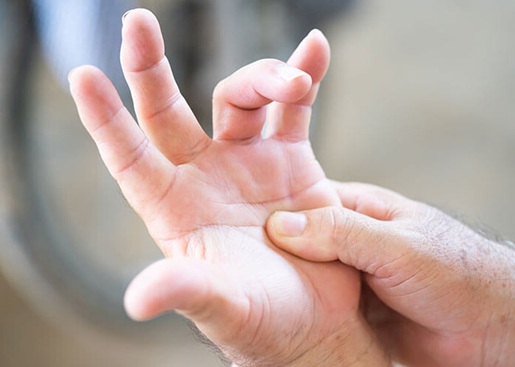
Trigger finger is one of the most common causes of finger pain and stiffness.
But it often creeps up slowly until one day your finger suddenly “locks” in place.
Whether you’ve noticed clicking, catching or a painful snapping motion when bending your fingers, you’re in the right place.
In this guide, I’ll walk you through what trigger finger is, what causes it, early warning signs, the best treatment options including exercises, when to use a trigger finger splint, and when surgery might be the best choice.
Everything here is written to help you understand what’s happening in your hand - and get you back to pain-free movement as quickly as possible.
What Is Trigger Finger?
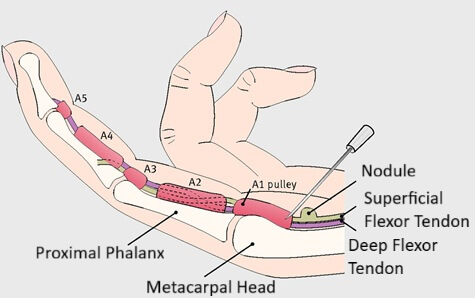
Trigger finger, medically known as stenosing tenosynovitis, happens when the flexor tendon in your finger becomes irritated, swollen or thickened.
Normally, the tendon glides smoothly through a series of tunnels called pulleys. But when the tendon becomes inflamed, it struggles to glide smoothly through a tight tunnel of connective tissue called the A1 pulley, located at the base of the finger.
When this tunnel becomes too tight:
- The tendon gets stuck in a bent position
- The finger catches or locks
- You feel clicking, popping, or sharp pain
Over time, the tendon may develop a small nodule, making movement even harder.
The snapping sensation people feel with trigger finger is the tendon suddenly “popping” through the tight pulley - a bit like a stretched elastic band flicking back into place.
Trigger finger most commonly affects the ring finger, middle finger and thumb, but it can occur in any digit and may involve more than one finger at a time.
Trigger Finger Symptoms
Trigger finger symptoms can be subtle at first, but they often progress over weeks or months. They typically follow a predictable progression pathway and key symptoms of trigger finger include:
Early Symptoms
- Mild discomfort at the base of the finger or thumb
- Morning stiffness that improves during the day
- A feeling of “tightness” or “fullness” in the palm
- Occasional clicking during finger bending
Moderate Symptoms
- Painful clicking when bending or straightening the finger
- Visible or palpable lump at the base of the finger
- Pain when gripping objects like a kettle, steering wheel or toothbrush
- Fatigue or burning in the palm
Advanced Symptoms
- Finger locks in a bent position, requiring help to straighten it
- A loud snap when the tendon releases
- Reduced range of motion or painful cracking during movement
- Severe pain after gripping tasks
- Difficulty performing fine motor tasks
Trigger figure symptoms are almost always worse in the morning, after periods of inactivity, or after repetitive gripping tasks. There are other possible causes of a lump in the palm of the hand such as ganglion cyst or dupuytren's contracture.
What Causes Trigger Finger?
Stenosing tenosynovitis develops due to a combination of repetitive stress, inflammation and friction around the flexor tendon and is often linked with other medical conditions. Common trigger finger causes include:
1. Repetitive Strain
The most common cause of trigger finger is overuse, particularly activities that involve:
- Forceful gripping
- Repeated squeezing
- Using vibrating equipment
This repeated motion causes micro-irritation to the tendon sheath, leading to swelling. Over time, this repeated stress thickens the pulley and irritates the tendon.
Common activities that can cause trigger finger include gardening, weightlifting, sewing, using handheld tools, carpentry and playing musical instruments.
2. Medical Conditions
Certain health issues significantly increase the risk of developing trigger finger:
- Diabetes – stenosing tenosynovitis is up to ten times more common in people with diabetes
- Rheumatoid arthritis
- Hypothyroidism
- Gout
- Carpal tunnel syndrome
These conditions increase inflammation around the tendons and connective tissues increasing the risk of developing stenosing tenosynovitis.
3. Age & Gender
People aged 40–70 are most affected by trigger finger, and women are more likely than men to develop the condition.
4. Hand Injuries
Previous trauma, fractures e.g. boxer's fracture, or lacerations around the tendon can make the sheath more prone to irritation. There may be tendon thickening, pulley narrowing, nodules on the tendon or fibrosis from old injuries.
Diagnosing Stenosing Tenosynovitis
Trigger thumb or finger is usually easy to diagnose through a detailed history and clinical exam.
A health professional will:
- Palpate the base of the finger for a tender lump
- Move the finger through flexion and extension
- Check for locking or snapping
- Assess swelling, grip strength and range of motion
Imaging is rarely required for stenosing tenosynovitis, but ultrasound may be used in unusual or complex cases to assess tendon thickening.
What Could Be Mistaken For Trigger Finger?
Other conditions can mimic trigger finger, including:
- Dupuytren’s Contracture:thickening of tissue in the palm causing finger stiffness.
- Arthritis: especially at the finger joints, causing pain and limited movement.
- Tendon Injuries: partial tendon tears or inflammation of nearby tendons.
- Nodules or Cysts: swelling in the finger that limits movement.
Find out more about common causes of hand lumps.
When To See Your Doctor
See a doctor if your finger locks frequently, becomes very painful, affects daily tasks, or hasn’t improved after a few weeks of conservative care. Sudden locking in a bent position is also a sign to seek medical advice.
#CommissionsEarned from Amazon on qualifying purchases
How To Treat Trigger
Finger
Trigger finger treatment depends on the severity of symptoms and how long you have had them. Most people improve without surgery if they start home treatment for trigger finger early.
1. Rest & Activity
Modification
The best place to start with trigger finger treatment is reducing or temporarily avoiding activities that provoke pain which allows inflammation to settle
This may include:
- Limiting gripping activities
- Modifying work tools e.g. grip size, weight
- Taking breaks during repetitive tasks
2. Trigger Finger Splint
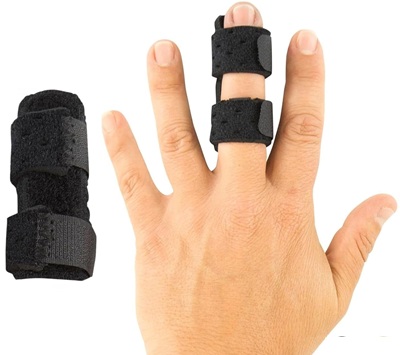
A trigger finger splint is one of the simplest and most effective treatments.
Wearing a trigger finger splint:
- Keeps the finger straight
- Reduces tendon irritation
- Helps shrink inflammation in the pulley
- Prevents locking episodes
Splints are especially beneficial at night when the finger tends to curl while you sleep.
Trigger finger splints are typically worn for 4–8 weeks, usually at night, but daytime splinting can help in more severe cases.
3. Anti-Inflammatory Care
Anti-inflammatory relief is really useful for mild to moderate cases of stenosing tenosynovitis such as:
- Ice massage
- NSAID medication
- Anti-inflammatory gels
- Contrast baths (heat + cold) for stiffness
4. Steroid Trigger
Finger Injections
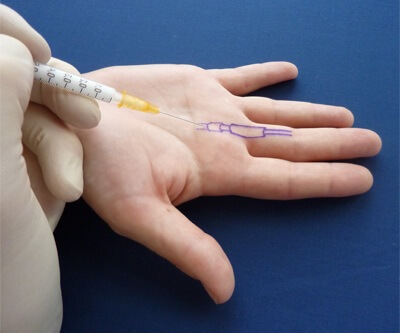
A corticosteroid injection into the tendon sheath is one of the most effective treatments for moderate trigger thumb or finger.
Benefits of trigger finger injections include:
- Rapid pain reduction
- Reduced swelling
- Improved tendon glide
- Prevents locking
- Relief may occur within 24–72 hours.
Success rate for trigger finger injections is:
- Up to 90% for non-diabetic patients
- Around 60–70% for people with diabetes
5. Physical Therapy & Exercises
Trigger finger therapy can be extremely helpful, especially in early stages. Treatment may include:
- Hands-on Therapy: Soft-tissue and myofascial release, tendon mobilisation and ultrasound therapy.
- Trigger Finger Exercises: improves tendon glide, reduces stiffness and prevents flare-ups
Effective exercises for trigger finger include:
- Tendon Gliding Sequence: Moves the tendon back and forth through its sheath. Helps reduce catching and restore smooth movement.
- Passive Finger Extension Stretch: Gently straightens the finger using the opposite hand to relieve tightness.
- Tabletop Stretch: Strengthens the intrinsic hand muscles and improves finger extension.
- Finger Abduction/Adduction: Helps improve overall hand control and coordination.
- Grip Strengthening (Late Stage): Only introduced once pain decreases.
Gradual strengthening helps prevent recurrence and improves overall hand function.
Trigger Finger Surgery
If symptoms don’t improve after 8–12 weeks of conservative treatment- or if the finger becomes stuck frequently - trigger finger surgery is the next step.
There are two types of surgery for trigger finger:
1. Open Trigger Finger Release Surgery
- Small incision in the palm
- Surgeon releases the tight pulley
- Immediate improvement in movement
- Very high success rate (95–99%)
2. Percutaneous Release
- No incision therefore no scarring
- A needle divides the pulley under ultrasound or manual guidance
- Quicker recovery time
- Not suitable for all finger types
Trigger Finger Surgery Recovery
- Light use: 3–5 days
- Returning to normal use: 2–3 weeks
- Full recovery: 6–8 weeks
Hand therapy may be recommended to speed up recovery and reduce stiffness and scarring. Problems after trigger finger surgery are rare but may include persistent pain, stiffness, swelling and infection.
Trigger Finger Recovery Timeline
Most people recover extremely well with proper trigger finger treatment and typical recovery takes:
- Mild cases: 2-4 weeks
- Moderate cases: 4-8 weeks
- After injection: relief often within days
- After surgery: 3-8 weeks. Long-term cure rate 90–99%
Without treatment, trigger thumb or finger can become permanent, causing long-term stiffness, fixed deformity and reduced grip strength.
How To Prevent Trigger Finger
You can reduce your risk of developing stenosing tenosynovitis by:
- Using padded or ergonomic handles
- Taking regular breaks from gripping activities
- Stretching fingers daily
- Strengthening the forearm and hand muscles
- Managing medical conditions like diabetes or arthritis
- Avoiding repetitive heavy squeezing
Small lifestyle changes can dramatically reduce the likelihood of recurrence.
FAQs
What Is Trigger Finger?
What Is Trigger Finger?
Trigger finger, aka stenosing tenosynovitis, is a condition where a finger gets stuck in a bent position due to inflammation or thickening of the flexor tendon or its sheath. This makes the tendon catch as you try to straighten the finger, often causing clicking, locking or pain at the base of the finger. The finger may end up stuck in a bent position.
Trigger thumb or finger is usually caused by irritation and thickening of the tendon sheath from repetitive gripping, overuse, inflammation, diabetes, rheumatoid arthritis or previous hand injury. Anything that increases friction around the tendon can trigger the condition.
Can Trigger Finger Heal On Its Own?
Can Trigger Finger Heal On Its Own?
Yes, mild cases of stenosing tenosynovitis can improve on their own, especially with rest, splinting, anti-inflammatory measures and targeted trigger finger exercises.
However, moderate to severe cases often need treatment such as trigger finger splinting, injections or surgery to fully resolve the locking and pain.
What Does Trigger Finger Surgery Involve?
What Does Trigger Finger Surgery Involve?
Trigger finger surgery is a quick procedure (often 10–15 minutes) where the surgeon releases the tight pulley that is restricting the tendon. This allows the tendon to glide smoothly again. Most people regain full movement within a few weeks.
Is Splinting Helpful For Trigger Finger?
Is Splinting Helpful For Trigger Finger?
Yes, a trigger finger splint is often recommended to keep the finger straight and reduce irritation at the tendon sheath. Wearing a splint at night can significantly reduce morning stiffness and locking.
What Exercises Help Trigger Finger?
What Exercises Help Trigger Finger?
Gentle stretching and tendon-gliding exercises help reduce stiffness, improve tendon motion and decrease catching. Common exercises include finger extensions, passive stretches and tendon-gliding sequences performed several times a day.
Is Trigger Finger Related To Arthritis?
Is Trigger Finger Related To Arthritis?
Stenosing tenosynovitis itself isn’t arthritis, but hand conditions like rheumatoid arthritis and osteoarthritis can increase your risk because they cause inflammation around the tendons and joints.
What Should You Not Do With A Trigger Finger?
What Should You Not Do With A Trigger Finger?
Avoid forcing the finger to straighten or bend, as this can worsen inflammation and pain. Don’t ignore persistent pain, and avoid repetitive gripping or heavy use of the affected finger until it is assessed.
High-impact activities, like weightlifting or forceful grasping, should be minimized. Self-massaging aggressively or trying to “pop” the finger can also aggravate the tendon.
What Is The Most Common Finger To Get A Trigger Finger?
What Is The Most Common Finger To Get A Trigger Finger?
The ring finger is the most commonly affected finger, followed by the middle finger. The thumb is also frequently involved, especially in individuals who perform repetitive gripping tasks.
What Is The Difference Between Trigger Finger vs Mallet Finger vs Jersey Finger?
What Is The Difference Between Trigger Finger vs Mallet Finger vs Jersey Finger?
Trigger finger is caused by tendon sheath inflammation and makes the finger catch or lock when bending.
Mallet finger is caused by extensor tendon rupture and prevents straightening the fingertip, usually treated with a splint.
Jersey finger is caused by flexor tendon rupture and prevents bending of the fingertip, often requiring surgery.
Trigger Finger Summary
Trigger finger, aka stenosing tenosynovitis, is a common condition that causes pain, stiffness and locking in the fingers or thumb.
With early diagnosis and the right treatment - from splinting and exercises to steroid injections or trigger finger surgery - most people make a full recovery.
For stubborn cases, trigger finger surgery is quick, effective and offers long-term relief.
If your finger is sticking, clicking, locking or progressively getting worse, don’t wait. Early treatment often leads to faster, easier recovery.
You might also be interested in the following articles:
- Lump In Palm Of Hand
- Lump On Finger
- Mallet Finger
- Jersey Finger
- Hand And Finger Pain
- Pain In The Thumb
- Boxers Fracture
- Dupuytren Contracture
- Carpal Tunnel Syndrome
- Wrist Tendonitis
- Wrist Lumps & Bumps
Related Articles
Shoulder Diagnosis
September 23rd, 2026
Wrist Diagnosis
May 12th, 2026
Elbow Diagnosis
February 26, 2026
Page Last Updated: May 12th, 2026
Next Review Due: May 12th, 2028

Visitor Comments
"Such an informative and valuable site. Clearly written and matches the guidance from my orthopedic surgeon. Even offers many rehab exercises. Thank you very much!" Izabela
"I am a massage therapist and found your website perfect. Very useful. Clear, easy understand. Big help. Thank you!" Viktoria
"This is a great site. Very informative" Marilyn
"I benefited a lot from your distinguished work, thank you." Sayed
"Hi
and thanks so much, great site! You
are doing a lot of good in the world with this helpful site, thanks again." Karen
The material on this website is intended for educational information purposes only. It should not delay or substitute medical advice, diagnosis or treatment. See our T&C's
Shoulder-Pain-Explained.com is a trading name of Wilson Health Ltd. All rights reserved. Terms & Conditions apply
© shoulder-pain-explained.com 2015-26 Last updated 30th September 2026
Contact Us About Us Blog Privacy Policy Advertising Policy Sitemap
