- Home
- Wrist Pain Diagnosis
- Skiers Thumb
Skiers Thumb
Written By: Chloe Wilson BSc (Hons) Physiotherapy
Reviewed By: SPE Medical Review Board
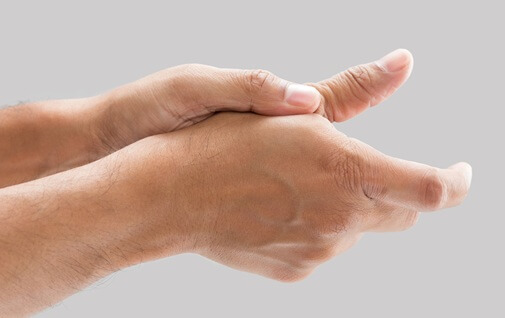
Skiers thumb is a common hand injury that causes pain at the base of the thumb after a fall.
It happens when the main stabilising ligament on the inside of the thumb, the ulnar collateral ligament (UCL), gets stretched or torn.
Falling on an outstretched hand, catching your thumb awkwardly during sport, or falling while holding a ski pole are common causes of a torn thumb ligament.
It often leads to pain, swelling, weak grip strength and thumb instability. Mild injuries can settle with splinting, but more severe tears may require surgery.
In this guide, I’ll walk you through how to recognise the symptoms of skier’s thumb, how to tell if the ligament is torn, what treatment involves, and how long recovery usually takes — so you know exactly what to expect and when to seek help.
Skiers Thumb At A Glance
Cause: Thumb forced backwards, often during a fall
Injury: Stretch or tear of the ulnar collateral ligament
Symptoms: Pain, swelling, weak grip, thumb instability
Treatment: Splinting for mild injuries, surgery for complete
tears
Recovery Time: Around 4–6 weeks for sprains, up to 3–4
months after surgery
What Is Skiers Thumb?
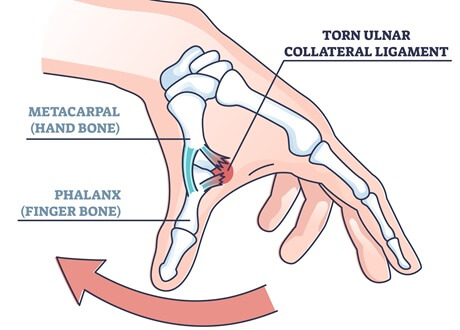
Skiers thumb is an injury to the ulnar collateral ligament (UCL) at the base of the thumb.
This ligament sits at the metacarpophalangeal (MCP) joint, the big knuckle where your thumb meets your hand.
Its job is to stabilise the thumb when you grip or pinch.
When the thumb is forced backwards or sideways too far, the ligament can:
- Stretch: Grade 1 Sprain
- Partially Tear: Grade 2 Injury
- Completely Rupture: Grade 3 Injury
In simple terms: Skiers thumb is a sprain or tear of the main stabilising ligament of the thumb.
NB this condition should not be confused with an elbow UCL injury - there are two ligaments with the same name!
What Causes A Thumb Ligament Sprain?
The most common cause of skiers thumb is falling onto an outstretched hand with the thumb forced backwards away from the palm.
Classic scenarios include:
- Falling while holding a ski pole
- Falling during football, rugby or netball
- A cycling accident
- A fall onto the hand at home
It can also happen from any sudden force that bends the thumb backwards and is a common cause of pain in the thumb after a fall.
What Are The Symptoms Of Skiers Thumb?
The most common skiers thumb symptoms include:
- Pain and tenderness at the base of the thumb
- Swelling and bruising around the thumb knuckle
- Weak grip or pinch strength causing difficulty holding things
- Thumb instability or “giving way”
- Pain when trying to open jars or turn keys
- Thumb stiffness and reduced range of motion
How To Tell If Your Thumb Ligament Is Torn
This is one of the most common questions people ask. Signs that the UCL thumb ligament may be completely torn rather than just sprained include:
- A popping sound or sensation at time of injury
- Severe swelling or bruising
- Significant weakness gripping objects
- Pain when pinching
- The thumb bends sideways more than normal
- A feeling of instability
You can sometimes still move your thumb even with a torn thumb ligament, so movement alone doesn’t rule out a serious injury.
How Is Skiers Thumb Diagnosed?
Diagnosing a thumb ligament sprain usually starts by the doctor taking a history and then involves a combination of clinical testing and imaging.
1. Clinical Examination

A clinician will perform a valgus stress test, gently pushing the thumb sideways to assess stability and compare it to the uninjured thumb.
Excessive movement suggests a torn thumb ligament.
2. Imaging Tests
- X-ray: checks for fractures or ligament avulsion injuries
- Ultrasound: can visualise ligament tears and detect displacement
- MRI: the most accurate test for confirming ligament damage
If the joint is unstable, surgery may be needed.
When To See A Doctor For Skiers Thumb
You should seek medical assessment if you suspect a UCL tear thumb if:
- There is significant swelling or bruising
- The thumb feels unstable
- You struggle to grip objects
- Pain persists beyond a few days
- You suspect a fracture
Early diagnosis of an ulnar collateral ligament thumb injury improves outcomes significantly as an untreated torn thumb ligament can lead to:
- Chronic thumb weakness
- Grip problems
- Arthritis later on
- Permanent instability
Skiers Thumb vs Gamekeeper’s Thumb
People often ask about the difference between skiers thumb and gamekeepers thumb. These injuries affect the same ligament but occur differently:
- Skiers Thumb: sudden, traumatic injury
- Gamekeepers Thumb: gradual, chronic strain over time
Both involve the ulnar collateral ligament and cause instability and weakness, but the underlying cause is different.
#CommissionsEarned from Amazon on qualifying purchases
How To Treat Skiers Thumb
Skiers thumb treatment depends on how severe the injury is.
1. Mild UCL Sprain Treatment

Grade 1 skiers thumb treatment usually involves a combination of:
- Rest and activity modification
- Ice and swelling control
- Thumb spica splint
- Pain relief if needed
Most people wear a skiers thumb splint for around 4–6 weeks to allow the ligament to heal in the correct position.
2. Partial UCL Tear Treatment
Grade 2 skiers thumb treatment usually includes:
- Immobilisation in a skiers thumb brace or splint
- Strict protection from sideways stresses
- Avoiding gripping activities
- Hand physical therapy after immobilisation
These injuries often heal without surgery and recovery typically takes 6–10 weeks.
3. Complete UCL Tear Treatment

If the UCL ligament is fully ruptured and unstable, surgery is often required.
This is especially true if the ligament becomes displaced and trapped above surrounding tissue, known as a "Stener lesion".
Stener lesions always require surgery because healing won’t occur without repair.
Exercises For Skier’s
Thumb Recovery
Once the UCL thumb injury has healed enough, rehab focuses on:
- Restoring thumb movement
- Improving grip strength
- Regaining pinch strength
- Functional hand use
Typical exercises for skiers thumb include:
- Thumb bends
- Pinch strengthening
- Grip exercises
- Resistance band work
- Sport-specific drills
Starting exercises too early can delay healing, so timing matters. Listen to your hand. If you notice an increase in your pain and swelling, it may indicate you are pushing your rehab too hard.
Skier’s Thumb Recovery
Thumb ligament sprain recovery varies depending on severity:
- Mild Sprain: 4–6 weeks
- Partial Tear: 6–10 weeks
- Surgery: 3–4 months to return to previous activities
Grip strength and pinch strength can take several months to fully normalise.
Returning to contact sport too early increases the risk of re-injury.
Most UCL thumb injuries treated appropriately result in full functional recovery but chronic instability or arthritis can occur without correct management.
Skiers Thumb Surgery
Most cases of UCL thumb injuries do not need surgery. However if the ulnar collateral ligament (UCL) is completely torn or displaced, surgery may be required to restore stability.
This is especially true for Stener lesions, where the ligament is trapped above the surrounding tissue and cannot heal on its own.
Surgery is usually recommended if:
- The ligament is completely torn (ruptured)
- The joint is unstable
- The ligament is trapped outside its normal position
- Grip strength is significantly affected
- There is an associated fracture
Skiers thumb surgery usually involves:
- Reattaching the torn ligament to the bone using sutures or small anchors
- Repairing any associated fractures if present
- Immobilising the thumb in a splint or cast after surgery to allow proper healing
Skiers Thumb Surgery Recovery Timeline
Everyone recovers at different rates following skiers thumb surgery but as a general guide:
- 0-2 Weeks: Rest and continuous splint wearing
- 2-6 Weeks: Removable splint, gentle thumb mobility exercises, but avoid using thumb for daily activities
- 6-8 Weeks: start light pinching exercises and continue range of motion exercises. Gradual reduce splint wear with light activities
- 8 Weeks+: Progress thumb strengthening rehab and wean off splint
- 3-4 Months: Sport specific exercises, and gradually return to normal activities, including sports
- 6-12 Months: Full recovery with no limitations
About 90% of complete thumb ligament tears repaired early have excellent outcomes.
FAQs About Skiers Thumb
Let’s have a look at some of the most commonly asked questions about UCL thumb injuries
Can skiers thumb heal without surgery?
Can skiers thumb heal without surgery?
Yes, many cases heal without surgery.
- Mild sprains and partial tears often recover with a thumb spica splint, rest and physiotherapy.
- Surgery is usually only required for complete tears, unstable joints or if the ligament is displaced (Stener lesion).
What is the best splint for skiers thumb?
What is the best splint for skiers thumb?
A thumb spica splint is the standard for stabilising the thumb while the UCL heals.
- It supports the thumb and limits sideways movement
- Can be used for both mild and partial tears
- Should be fitted by a healthcare professional to ensure proper alignment and comfort
Custom-made splints from a hand therapist may offer better support and compliance than over-the-counter options.
What does rehab for skiers thumb involve?
What does rehab for skiers thumb involve?
Rehabilitation begins after the UCL tear thumb has healed enough to allow gentle movement. Focus areas include:
- Restoring thumb range of motion
- Regaining grip and pinch strength
- Functional exercises for daily activities
- Sport-specific drills once cleared
Exercises often include thumb bends, resistance band work, and grip strengthening.
When can I return to sport after skiers thumb?
When can I return to sport after skiers thumb?
Return depends on recovery and stability following an ulnar collateral ligament thumb injury:
- Mild sprain: often 4–6 weeks
- Partial tear: 6–10 weeks
- After surgery: 3–4 months
Your thumb should be pain-free, stable, and have near-normal strength before returning to sport. Always follow your physiotherapist’s guidance.
Skiers thumb vs gamekeeper’s thumb - what’s the
difference?
Skiers thumb vs gamekeeper’s thumb - what’s the difference?
Both injuries affect the ulnar collateral ligament (UCL), but the causes differ:
- Skiers Thumb: sudden, traumatic injury (fall or sports accident)
- Gamekeeper’s Thumb: gradual, chronic thumb ligament strain over time
Symptoms like pain, weakness, and instability can be similar, but skier’s thumb typically comes on suddenly and may need quicker assessment.
Can I still move my thumb if the ligament is torn?
Can I still move my thumb if the ligament is torn?
Yes. Even if the UCL is completely torn, movement may still
be possible.
However, the thumb may feel unstable, weak, or painful when pinching or
gripping, so movement alone doesn’t rule out a serious injury.
Skiers Thumb Summary
Skiers thumb is a common cause of pain in the thumb caused by a torn or stretched ulnar collateral ligament at the base of the thumb.
A UCL thumb injury typically causes pain, swelling and weakness after a fall onto an outstretched hand. Mild cases often heal with splinting, but complete ligament tears may require surgery.
If your thumb feels unstable or weak after an injury, it’s important to get assessed early to prevent long-term problems.
With the right treatment and rehab, most people make a full recovery from an ulnar collateral ligament thumb injury and return to normal activities.
Skiers thumb and gamekeepers thumb are similar conditions, both affecting the UCL thumb ligament.
You may also be interested in the following articles:
- Pain In The Thumb
- Pain In Back Of Hand
- Pain In Palm Of Hand
- Trigger Finger
- De Quervain Tenosynovitis
- Inner Wrist Pain
- Central Wrist Pain
- Outer Wrist Pain
Related Articles
Shoulder Diagnosis
September 23rd, 2026
Wrist Diagnosis
May 12th, 2026
Elbow Diagnosis
February 26, 2026
Page Last Updated: May 12th, 2026
Next Review Due: May 12th, 2028

Visitor Comments
"Such an informative and valuable site. Clearly written and matches the guidance from my orthopedic surgeon. Even offers many rehab exercises. Thank you very much!" Izabela
"I am a massage therapist and found your website perfect. Very useful. Clear, easy understand. Big help. Thank you!" Viktoria
"This is a great site. Very informative" Marilyn
"I benefited a lot from your distinguished work, thank you." Sayed
"Hi
and thanks so much, great site! You
are doing a lot of good in the world with this helpful site, thanks again." Karen
The material on this website is intended for educational information purposes only. It should not delay or substitute medical advice, diagnosis or treatment. See our T&C's
Shoulder-Pain-Explained.com is a trading name of Wilson Health Ltd. All rights reserved. Terms & Conditions apply
© shoulder-pain-explained.com 2015-26 Last updated 30th September 2026
Contact Us About Us Blog Privacy Policy Advertising Policy Sitemap
