- Home
- Hand Pain Diagram
- Finger Pain
Hand And Finger Pain
Written By: Chloe Wilson BSc (Hons) Physiotherapy
Reviewed By: SPE Medical Review Board
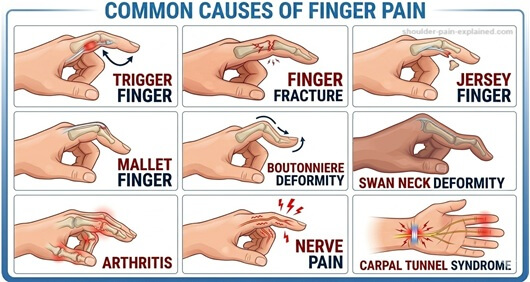
Hand and finger pain is a common problem that can affect everything from gripping and typing to simple daily tasks.
Whether you are experiencing pain inside the finger, stiffness in the joints or difficulty moving your fingers, these symptoms usually indicate irritation, injury or damage to the soft tissues, joints or finger bones.
Finger joint pain may develop gradually from overuse or come on suddenly following an injury. In many cases, symptoms are localised to one finger, but they can also involve multiple fingers or extend into the hand, leading to wrist and finger pain.
In this guide, we will explore the most common finger pain causes, how to recognise them and what to do next.
Causes Of Finger Pain
There are many possible causes of hand and finger pain, ranging from overuse injuries and trauma to joint disease and nerve compression. The location and type of pain often help narrow down the diagnosis. So let’s have a look at the most common causes of finger pain.
1. Trigger Finger
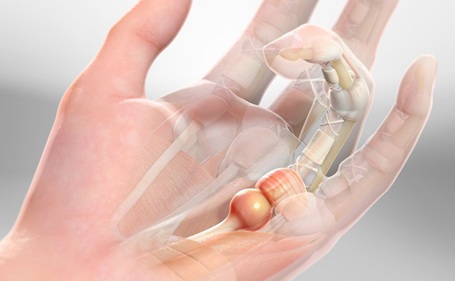
One of the most common causes of hand and finger pain is Trigger Finger.
Trigger finger occurs when one of the flexor tendons in the finger becomes irritated and thickened, restricting smooth movement.
Common symptoms of trigger finger include:
- Pain at the base of the finger or palm, worse in the morning
- Clicking, catching, snapping sensation or locking
- Weakness and difficulty gripping
- Visible lump at base of finger in advanced stages
Trigger finger is typically caused by repetitive strain e.g. gripping or squeezing, diabetes, inflammatory conditions or previous hand injury.
You can find out all about the causes, symptoms and best treatment options in the Trigger Finger section.
2. Finger Fractures

A common cause of sudden, sharp finger pain is a fracture where there is a break in one of the finger bones, usually following a trauma.
The little finger is the most frequently broken (punching injury), followed by the thumb (falls or sports injuries) and then fingertips (crush injuries).
Common symptoms of finger fractures include:
- Sudden severe pain
- Swelling and bruising
- Difficulty moving the finger
Finger fractures are typically caused by punching a hard surface, falls, direct impact or crush injuries.
Find out more about the causes, symptoms, diagnosis and treatment of finger fractures.
3. Mallet Finger
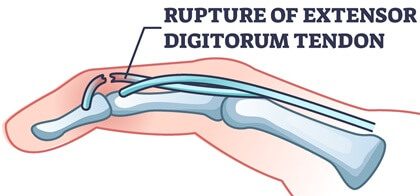
A common cause of finger tip pain with associated drooping is Mallet Finger.
Mallet finger is caused by damage to the extensor tendon that straightens the fingertip, usually after sudden impact.
Common symptoms of mallet finger include:
- Drooping fingertip
- Pain and swelling at the end of the finger
- Inability to actively straighten fingertip
Mallet finger is typically caused by sports injuries especially ball sports, direct trauma or sudden forced bending of the fingertip.
Find out more about hand and finger pain and how to treat it in the Mallet Finger section.
4. Jersey Finger
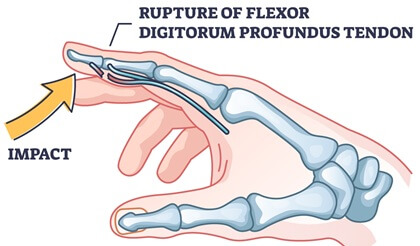
A less common cause of finger pain is Jersey Finger, which usually affects the ring finger.
Jersey finger involves tearing of one of the flexor tendons that bends the fingertip and requires prompt medical treatment.
Common symptoms of Jersey finger include:
- Fingertip rests in straight position
- Inability to actively bend the fingertip
- Pain on the palm side of the finger
- Sharp pain or pop at time of injury
Jersey finger is typically caused by forceful grabbing injuries, often sports-related, tackling, wrestling or rock climbing.
Find out more about the causes, symptoms and best treatment options in the Jersey Finger section.
5. Swan Neck Deformity
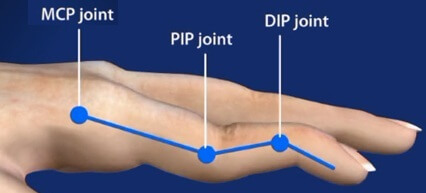
Another common cause of pain in finger joints is Swan Neck Deformity which can affect a single or multiple fingers.
This is a degenerative condition where tendon imbalance causes abnormal finger positioning.
Common symptoms of Swan Neck Deformity include:
- Bent fingertip and hyperextended middle joint
- Progressive stiffness, weakness and reduced function
Typical causes of Swan Neck Deformity include rheumatoid arthritis, previous finger injury and neurological conditions e.g. stroke or cerebral palsy.
Find out more about the presentation, classic features and best treatment options in the Swan Neck Deformity section.
6. Boutonniere Deformity
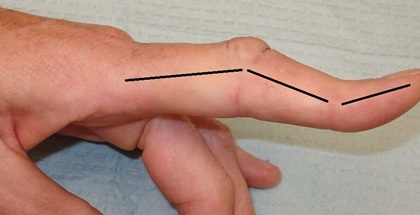
Another common cause of finger joint pain is Boutonniere Deformity.
Boutonniere’s deformity affects the middle joint of the finger due to tendon damage, resulting in the opposite presentation to Swan Neck Deformity.
Common symptoms of Boutonniere Deformity include:
- Hyperextended fingertip and bent middle joint
- Pain and stiffness
- Swelling at PIP (middle) joint
- Reduced finger function and dexterity
Typical causes include trauma e.g. jammed finger or direct blow, or inflammatory joint disease e.g. rheumatoid arthritis
Find out more about pain in finger joints and the best treatment options in the Boutonniere Deformity section.
7. Arthritis
Arthritis is a leading cause of finger joint pain and stiffness, especially in older adults. Arthritis often affects multiple joints in the fingers and hand.
Common symptoms of finger arthritis include:
- Aching and stiff joints, worse in the morning
- Swelling and reduced movement
- Bony enlargements in the fingers
There are two main types of hand and finger arthritis, Osteoarthritis (wear and tear) and Rheumatoid arthritis (autoimmune inflammation).
8. Nerve Pain
Another common cause of hand and finger pain is nerve damage which often affects multiple fingers.
Nerve-related conditions that cause pain in fingers are normally associated with abnormal sensations.
Common symptoms of nerve related pain include:
- Burning, tingling or sharp pain
- Numbness or pins and needles
- Weakness and decreased grip strength
Typical causes of finger pain from nerve irritation include compression at the neck, shoulder, elbow or wrist, ulnar nerve compression (affects ring and little finger) and median nerve compression (affects thumb, index and middle finger).
Find out more about hand and finger pain from nerve problems and how to treat them in the arm nerve pain section.
9. Carpal Tunnel Syndrome
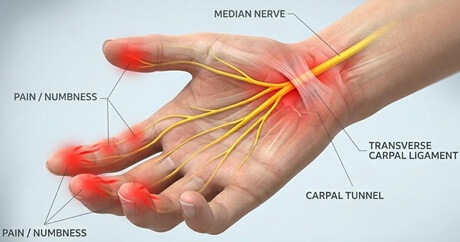
A common cause of wrist and finger pain with altered sensation is carpal tunnel syndrome.
It is caused by compression of the median nerve as it passes through the wrist, often leading to symptoms in the palm and fingers.
Common symptoms of carpal tunnel syndrome include:
- Tingling, numbness or burning in the palm, thumb, index and middle fingers
- Pain that may extend into the hand or wrist
- Reduced sensation
- Weak grip and clumsiness
- Pain is often worse at night
Common causes of CTS include repetitive hand or wrist use, wrist injuries e.g. wrist fractures, fluid retention e.g. pregnancy and arthritis or wrist swelling.
Find out all about the common causes and treatment options including the best wrist splints in the Carpal Tunnel Syndrome section.
Rare Causes Of Finger Pain
There are some less common conditions can also contribute to persistent or unusual hand and finger pain:
- Gout: Sudden severe pain inside finger, redness and swelling due to crystal build-up in the joint
- Infection: Red, swollen, painful fingertip or nail area
- Dupuytren’s Contracture: Thickened palm tissue causing finger bending and stiffness
- De Quervain’s Tenosynovitis: Thickening and swelling of tendon sheath causes pain between thumb and finger
- Raynaud’s Syndrome: Pain in finger with colour changes triggered by cold or stress
- Tumours or Cysts: Rare finger lumps causing local pressure and discomfort e.g. ganglion cyst
- Finger Sprain: Ligament injury causing finger joint pain, swelling and reduced movement after twisting or impact
Finger Pain By Location
The location of your symptoms can help identify the underlying cause of your hand and finger pain.
Some conditions or injuries can affect any of the fingers such as finger fractures, tendon strains, ligament sprains and arthritis but others are more likely to affect specific fingers:
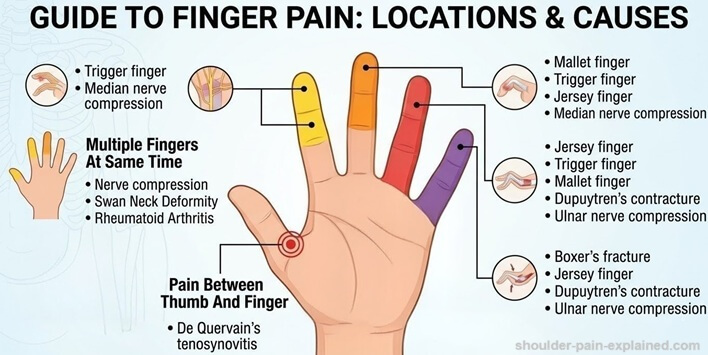
- Index Finger Pain: Trigger finger, median nerve compression
- Middle Finger Pain: Mallet finger, trigger finger, jersey finger, median nerve compression
- Ring Finger Pain: Jersey finger, trigger finger, mallet finger, Dupuytren’s contracture, ulnar nerve compression
- Little Finger Pain: Boxer’s fracture, jersey finger, Dupuytren’s contracture, ulnar nerve compression
- Multiple Fingers At Same Time: Nerve compression, Swan Neck Deformity, rheumatoid arthritis
- Pain Between Thumb And Finger: De Quervain’s tenosynovitis
Understanding where your pain in finger is located helps narrow down the causes of pain in hands and fingers and guides treatment.
Finger Pain Symptoms
Different symptom patterns can also provide clues to the underlying cause of hand and finger pain:
- Sharp Finger Pain: Often linked to fractures, tendon injuries or nerve irritation
- Finger Pain In Pregnancy: Commonly due to carpal tunnel syndrome, fluid retention or joint swelling
- Finger Pain And Swelling: Usually caused by injury, arthritis, infection, gout or tendon inflammation
- Finger Pain In The Morning: Often linked to arthritis, trigger finger or overnight joint stiffness
- Lump On Finger: May be due to ganglion cysts, trigger finger nodules, Dupuytren’s contracture, arthritis bone changes or infection
When To See The Doctor
You should seek medical advice if your hand and finger pain is:
- Severe or worsening
- Following a significant injury
- Associated with deformity or inability to move the finger
- Causing persistent swelling or finger joint pain
- Not improving after 1–2 weeks
- Spreading into the hand or wrist
Early assessment of pain in hands and fingers helps prevent long-term stiffness, weakness or permanent deformity.
How To Treat Finger Pain
Hand and finger pain treatment depends on the underlying cause, but most cases of finger joint pain improve with conservative management, especially when addressed early.
#CommissionsEarned from Amazon on qualifying purchases
1. Self-Care
- Rest & Activity Modification: Reduce or avoid activities that aggravate symptoms, particularly gripping, typing or repetitive hand use
- Ice Therapy: Apply an ice pack for 10–15 minutes, 2–3 times daily to help reduce pain and swelling, especially after activity
- Splinting or Taping: Provides support, protects injured structures and helps maintain correct finger alignment. Particularly useful for CTS, mallet finger and jersey finger
- Pain Relief: Over-the-counter medications such as paracetamol or anti-inflammatories may help reduce hand and finger pain and inflammation short term
2. Rehabilitation
- Gentle Range Of Motion Exercises: to prevent stiffness and maintain mobility
- Tendon Gliding Exercises: to improve tendon movement and reduce adhesions
- Progressive Strengthening Exercises: once pain in finger allows
- Ergonomic Changes: e.g. to desk set up, to reduce repetitive strain during daily activities
3. Medical Treatment
If symptoms persist or are more severe, further treatment for pain in finger may be required:
- Physical Therapy: Structured rehabilitation programmes to restore movement and function while addressing the underlying cause of pain in finger joints
- Corticosteroid Injections: Commonly used for inflammatory conditions such as trigger finger or arthritis to reduce wrist and finger pain and swelling
- Management Of Underlying Conditions: Treatment of issues such as rheumatoid arthritis, carpal tunnel syndrome or gout where relevant
4. Surgery
Surgery is usually reserved for severe or persistent cases of hand and finger pain that do not respond to conservative treatment and may include:
- Tendon Repair: for injuries such as jersey finger
- Fracture Fixation: in displaced or unstable breaks
- Surgical Release: for trigger finger or carpal tunnel syndrome
- Correction of Long-Standing Deformities: if affecting finger function e.g. swan neck deformity
Most cases of pain inside finger settle well with early treatment and appropriate load management.
Hand And Finger Pain Summary
Hand and finger pain can develop for many different reasons and identifying the exact cause depends on both the location and type of symptoms.
Pain in the fingertip often suggests tendon injury such as mallet finger, while pain at the base of the finger may indicate trigger finger. Pain in finger joints is commonly linked to arthritis, whereas nerve-related symptoms may cause burning, tingling or numbness across multiple fingers.
More complex patterns of finger joint pain, swelling or deformity may suggest injury, inflammatory disease or, in rare cases, conditions such as gout, infection or structural ligament damage such as finger sprain.
Understanding these patterns is the first step in narrowing down the causes of finger pain. From here, you can explore each condition in more detail through the dedicated guides linked above to better understand diagnosis, treatment and recovery options.
You may also be interested in the following articles:
- Pain In Palm Of Hand
- Pain In Back Of Hand
- Pain In The Thumb
- Hand Pain Diagram
- Pain In Forearm
- Pain From Shoulder To Hand
Related Articles


Medical & Scientific References
- Finger Pain. NHS UK
- Wrist, Hand & Finger Problems. NHS Inform
- Finger Pain. Medline Plus
- Finger Pain Explained. The Othopaedic Institute
Page Last Updated: May 6th, 2026
Next Review Due: May 6th, 2028

Visitor Comments
"Such an informative and valuable site. Clearly written and matches the guidance from my orthopedic surgeon. Even offers many rehab exercises. Thank you very much!" Izabela
"I am a massage therapist and found your website perfect. Very useful. Clear, easy understand. Big help. Thank you!" Viktoria
"This is a great site. Very informative" Marilyn
"I benefited a lot from your distinguished work, thank you." Sayed
"Hi
and thanks so much, great site! You
are doing a lot of good in the world with this helpful site, thanks again." Karen
The material on this website is intended for educational information purposes only. It should not delay or substitute medical advice, diagnosis or treatment. See our T&C's
Shoulder-Pain-Explained.com is a trading name of Wilson Health Ltd. All rights reserved. Terms & Conditions apply
© shoulder-pain-explained.com 2015-26 Last updated 30th September 2026
Contact Us About Us Blog Privacy Policy Advertising Policy Sitemap
