- Home
- Hand Pain Diagram
- Carpal Boss
Carpal Boss
Written By: Chloe Wilson BSc (Hons) Physiotherapy
Reviewed By: SPE Medical Review Board
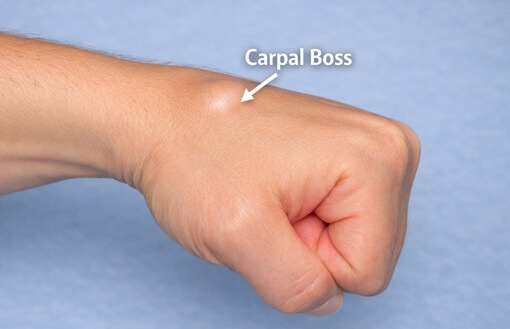
A carpal boss is a hard, fixed bony lump on the back of the wrist or hand.
It causes stiffness and pain with gripping or repetitive wrist movements and develops gradually over time due to repetitive stress or joint degeneration.
Often mistaken for a ganglion cyst, which is fluid-filled, a carpal boss is actually made of bone and cartilage.
In this guide, we will look at what causes the bony lump, common symptoms, diagnosis, treatment options, carpal boss exercises and how to prevent symptoms from returning.
What Is A Carpal Boss?
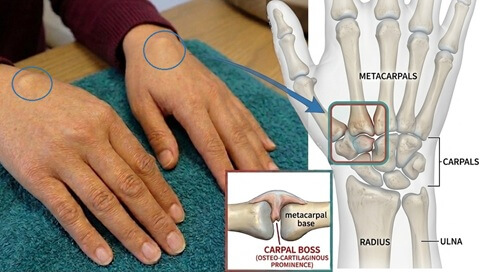
A carpal boss is a bony overgrowth that forms on the back of the wrist at the carpometacarpal (CMC) joint.
It most commonly develops between the second or third metacarpal bones and the small wrist bones.
The condition is also known as a “carpometacarpal boss”, “carpal bossing” or “metacarpal boss”.
The lump usually appears near the base of the index or middle finger and feels hard and fixed in place because it is attached to the underlying bone.
A carpal boss is the most common cause of a hard lump on the back of the hand.
What Happens In A Carpal Boss?
A carpal boss hand lump typically develops because of:
- Bone spur formation (osteophytes)
- Degenerative changes in the joint
- Repetitive stress across the wrist joint
- Small accessory bone called os styloideum
- Previous injury or trauma
Over time, the body responds to repeated stress, irritation or joint instability by laying down extra bone, creating the characteristic hard lump on the back of the hand.
The size of a CMC boss can vary - some are barely noticeable, while others become prominent and painful.
In clinic, I often see carpal boss wrist symptoms develop after a sudden increase in activities that repeatedly load the wrist, particularly weightlifting, racket sports and long hours of typing. Many people initially assume they have a ganglion cyst because the lump appears in a very similar location.
Carpal Boss vs Ganglion Cyst
A carpal boss is frequently mistaken for a ganglion cyst, but there are several important differences.
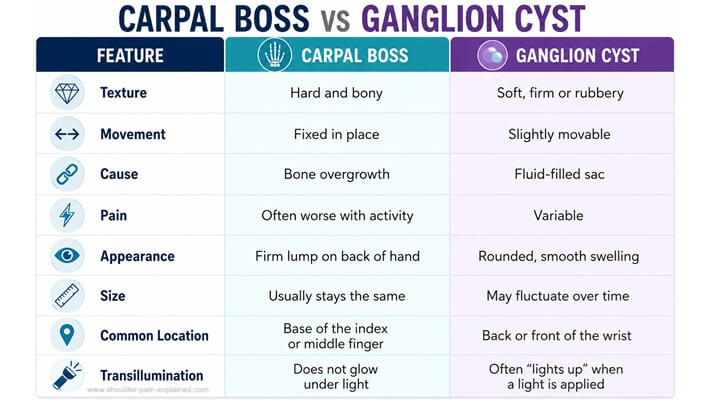
Because the two conditions can look very similar, imaging is sometimes needed to confirm the diagnosis.
What Causes Carpal Boss?
A CMC boss is usually caused by a combination of factors that together increase the stress through the carpometacarpal joint.
Common causes of carpal boss wrist include:
1. Repetitive Hand Use
Repeated loading through the wrist and hand is one of the most common causes of carpal bossing.
Activities particularly linked with a metacarpal boss include racket sports, weightlifting, push-ups, golf, rowing, typing, manual labour and repetitive gripping tasks.
These activities repeatedly compress the joint and can trigger joint irritation, increasing the risk of bone spur formation and wrist bossing.
2. Joint Degeneration
Another common cause of carpal bossing is osteoarthritis. Wear and tear leads to cartilage breakdown and osteophyte formation around the carpometacarpal joint.
As the joint becomes irritated and less stable, the body attempts to reinforce the area by producing extra bone, resulting in a wrist bone spur.
3. Previous Wrist Injury
Another risk factor for developing a carpometacarpal boss is a previous wrist injury as it may alter the mechanics of the joint and increase the risk of bony overgrowth.
Examples include wrist fractures, sprains, repetitive micro trauma and direct impact injuries.
In some cases, carpal boss wrist symptoms may develop months or even years after the original injury.
4. Accessory Bone (Os Styloideum)
Some people naturally have a small extra bone called an os styloideum in the back of the wrist. While this does not always cause problems, it can increase stress across the joint and contribute to metacarpal boss formation.
5. Genetics
There may also be a hereditary component with carpal bossing. Some people are more prone to developing bony overgrowths and degenerative joint changes.
Carpal Boss Symptoms
Symptoms of a carpometacarpal boss wrist can vary widely depending on the size of the lump and whether nearby tissues become irritated.
- Hard Lump: most common symptom is a fixed, immovable, hard lump on back of hand, usually near the base of the index or middle finger
- Wrist/Back Of Hand Pain: Dull background ache with episodes of sharp pain with wrist loading or extension e.g. push-ups, gripping, typing and racket sports
- Swelling And Inflammation: soft tissue irritation leads to swelling, redness, warmth and tenderness, especially after repetitive hand use
- Reduced Wrist Movement: stiffness or discomfort when moving the wrist, particularly with extension or weight-bearing activities
- Tendon Irritation: extensor tendons become irritated as they move over the bony lump, causing clicking, snapping, weakness and tendon pain
In clinic, I often find that painful tendon clicking or reduced grip strength is what finally prompts people to seek treatment for a CMC boss.
Diagnosis Of CMC Boss
Carpal boss wrist diagnosis usually begins with a medical history and physical examination.
A healthcare provider will assess:
- The location and feel of the lump
- Wrist movement
- Areas of tenderness
- Tendon irritation
- Grip strength
Because a carpal boss hand lump can mimic other conditions, imaging tests are often used to confirm the diagnosis.
- X-Rays: most commonly used imaging test to diagnose a carpal boss as it can show wrist bone spurs, joint degeneration, accessory bones and bony enlargement at the CMC joint
- Ultrasound: helps distinguish a carpal boss from a ganglion cyst or assess surrounding tendon irritation
- MRI Scan: used if symptoms are severe or the diagnosis remains unclear to look for soft tissue inflammation, tendon damage, joint degeneration and bone edema
When Should I See A Doctor?
You should seek medical advice if you have:
- Persistent hand or wrist pain
- A new or growing lump on back of hand
- Significant wrist/hand weakness
- Reduced hand function
- Numbness
Differential Diagnosis
Several conditions can mimic a wrist carpal boss:
- Ganglion Cyst: Soft, fluid-filled lump that may change size
- Arthritis: More widespread joint pain and stiffness
- Bone Tumor: Rare, may grow rapidly or cause severe pain
- Tendonitis: Pain and swelling without a firm bony lump
- Lipoma: Soft fatty lump under the skin
- Fracture Callus: History of recent injury
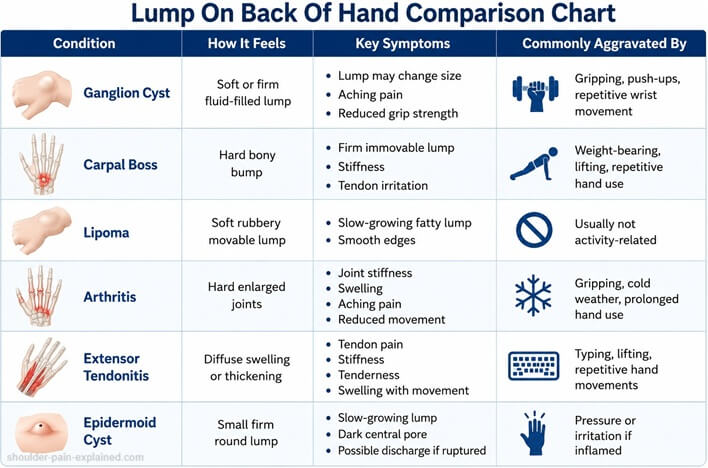
Correct diagnosis of a painful lump on back of hand is important because treatment approaches differ between conditions. You can find out more in the Lump On Back Of Hand section.
Carpal Boss Treatment
Most cases of carpal boss wrist improve with conservative treatment and do not require surgery.
1. Rest And Activity Modification
Reducing aggravating activities can help settle CMC boss inflammation and pain.
This may involve temporarily avoiding:
- Heavy lifting
- Push-ups
- Repetitive gripping
- High-impact sports
- Weight-bearing through the wrist
In clinic, I often find that simple activity modification alone significantly reduces bossing of the wrist pain within a few weeks, particularly when symptoms are caught early.
2. Ice And Anti-Inflammatories
Applying an ice pack for 10-15 minutes several times daily can help reduce pain and swelling, especially after aggravating activities.
Non-steroidal anti-inflammatory drugs (NSAIDs) may also help control inflammation if appropriate.
3. Splinting
A wrist splint can be worn to reduce movement and stress across the irritated joint, allowing symptoms to settle.
Wrist splints are usually most effective during painful flare-ups or unavoidable repetitive activities.
4. Physical Therapy
Physical therapy can help improve wrist mechanics, reduce irritation and strengthen surrounding muscles. Treatment may include:
- Stretching and stretching exercises
- Joint mobilizations
- Activity modification advice
- Postural correction
- Taping techniques
Improving wrist stability can help reduce ongoing stress through the carpometacarpal joint.
5. Corticosteroid Injection
If symptoms persist, a corticosteroid injection may help reduce inflammation and pain around the wrist bone spur. However, injections do not remove the bony lump itself.
Carpal Boss Exercises
Carpal boss pain exercises can help improve wrist flexibility, strength and stability while reducing irritation around the joint.
1. Wrist Extensor Stretch
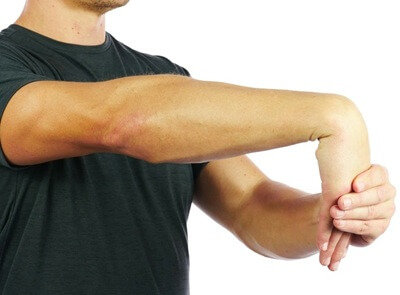
This wrist extensor exercise stretches the muscles on the back of the forearm.
How to do it:
- Straighten your arm
- Bend the wrist downward
- Use the opposite hand to gently increase the stretch
- Hold for 20-30 seconds
- Repeat 3 times
2. Grip Strengthening
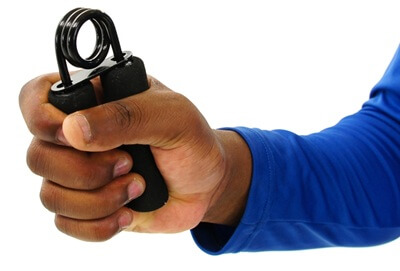
Improving grip strength can help support the wrist joint.
How to do it:
- Squeeze a soft ball or therapy putty
- Hold for 5 seconds
- Slowly relax
- Repeat 10-15 times
3. Wrist Stability Exercise
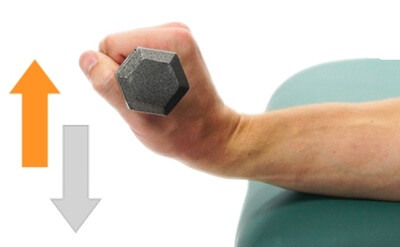
This helps improve control and stability through the wrist.
How to do it:
- Rest your forearm on a table
- Hold a light weight with your palm facing down
- Slowly lift and lower the weight
- Repeat 15-30 times
- Then turn your wrist over so your palm faces the ceiling and repeat the exercise
Carpal boss exercises should not significantly increase pain. If symptoms worsen, exercises may need modifying.
Carpal Boss Surgery
Surgery is not usually necessary for a carpometacarpal boss but may be considered if:
- Symptoms are severe
- Conservative treatment fails
- Tendons are repeatedly irritated
- Daily activities are significantly affected
The procedure usually involves removing the bony prominence and any associated arthritic changes.
Recovery After Surgery
Recovery times vary, but most people regain normal function within several weeks to months.
Rehabilitation may include:
- Temporary immobilization
- Scar management
- Progressive mobility and strengthening exercises
While surgery is generally successful, recurrence is possible in some cases.
Carpometacarpal Boss Prevention
It is not always possible to prevent carpal boss wrist pain, but reducing repetitive stress across the joint may help lower the risk of symptoms developing or returning.
- Avoid Repetitive Overload: Take regular breaks during repetitive hand activities and avoid excessive strain
- Improve Wrist Mechanics: Use proper technique during sports, lifting and work activities Strengthen Supporting Muscles: Regular strengthening exercises for the wrist and forearm muscles
- Address Symptoms Early: Treat wrist pain and inflammation early to help prevent chronic irritation and worsening wrist bone spur formation
FAQs About Carpal Boss
Is A Carpal Boss Dangerous?
Is A Carpal Boss Dangerous?
A CMC boss is usually benign and not dangerous. However, persistent pain, rapid changes or any new growth should always be assessed by a healthcare professional.
Can A Carpal Boss Go Away On Its Own?
Can A Carpal Boss Go Away On Its Own?
The bony lump itself usually does not disappear without treatment. However, symptoms may improve significantly with conservative management.
Is A Carpal Boss Lump Arthritis?
Is A Carpal Boss Lump Arthritis?
Not always. Some cases are associated with degenerative arthritis, while others relate to repetitive stress or accessory bones.
Can You Pop A Wrist Carpal Boss?
Can You Pop A Wrist Carpal Boss?
No. Unlike a ganglion cyst, a carpal boss is made of bone and cannot be popped.
Does Carpal Boss Surgery Work?
Does Carpal Boss Surgery Work?
Most people experience good symptom relief after surgery, particularly when conservative treatment has failed.
Can A Carpal Boss Come Back?
Can A Carpal Boss Come Back?
Recurrence is possible, although it is relatively uncommon.
Carpal Boss Wrist Summary
A carpal boss is a hard bony lump that forms on the back of the wrist where the hand bones meet the wrist bones. It is commonly caused by repetitive stress, joint degeneration, previous injury or accessory bones.
Common symptoms include:
- A firm lump on the back of the hand
- Wrist pain
- Swelling
- Tendon irritation
- Reduced movement
Diagnosis typically involves physical examination and imaging such as X-rays or MRI scans.
Most cases respond well to conservative treatment including rest, splinting, physical therapy, activity modification and carpal boss exercises. Surgery may be recommended for persistent or severe symptoms.
Early diagnosis and appropriate treatment can help reduce metacarpal boss pain, improve function and prevent long-term irritation.
You may also be interested in the following articles:
- Hand Lump Diagnosis Guide
- Lump On Back Of Hand
- Pain On Back Of Hand
- Hand Pain Chart
- Pain In Palm Of Hand
- Forearm Pain
Related Articles
Shoulder Diagnosis
February 25th, 2026
Wrist Diagnosis
May 12th, 2026
Elbow Diagnosis
February 26, 2026
Medical & Scientific References
- Carpal Boss: Causes & Treatment. American Society For Surgery Of The Hand (ASSH)
- The Carpal Boss: Review Of Diagnosis And Treatment. Journal Of Hand Surgery. NIH National Library Of Medicine
- Carpal Boss. Cleveland Clinic
- Carpal Boss. Gloucestershire Hospitals NHS Foundation Trust UK
Page Last Updated: May 20th, 202
Next Review Due: May 20th, 2028

Visitor Comments
"Such an informative and valuable site. Clearly written and matches the guidance from my orthopedic surgeon. Even offers many rehab exercises. Thank you very much!" Izabela
"I am a massage therapist and found your website perfect. Very useful. Clear, easy understand. Big help. Thank you!" Viktoria
"This is a great site. Very informative" Marilyn
"I benefited a lot from your distinguished work, thank you." Sayed
"Hi
and thanks so much, great site! You
are doing a lot of good in the world with this helpful site, thanks again." Karen
The material on this website is intended for educational information purposes only. It should not delay or substitute medical advice, diagnosis or treatment. See our T&C's
Shoulder-Pain-Explained.com is a trading name of Wilson Health Ltd. All rights reserved. Terms & Conditions apply
© shoulder-pain-explained.com 2015-26 Last updated 15th June 2026
Contact Us About Us Blog Privacy Policy Advertising Policy Sitemap
