- Home
- Exercise Guide
- Wrist Stretches
Stretches For Wrist Pain
Written By: Chloe Wilson BSc (Hons) Physiotherapy
Reviewed By: SPE Medical Review Board
Stretches for wrist pain can help improve flexibility, reduce stiffness and restore movement, making everyday activities more comfortable.
Repetitive activities such as typing, driving, cooking and lifting can place strain on the wrists and forearms, while injuries can also leave the wrist painful and restricted.

The right wrist stretch exercises can help whether your wrists ache after repetitive activities, feel stiff following an injury or hurt when you bend them backwards.
In this guide, I will show you how to stretch your wrist with gentle mobility exercises and targeted wrist and forearm stretches, including some of the best wrist stretches to improve movement and ease discomfort.
Who Can Benefit From Wrist Stretches?
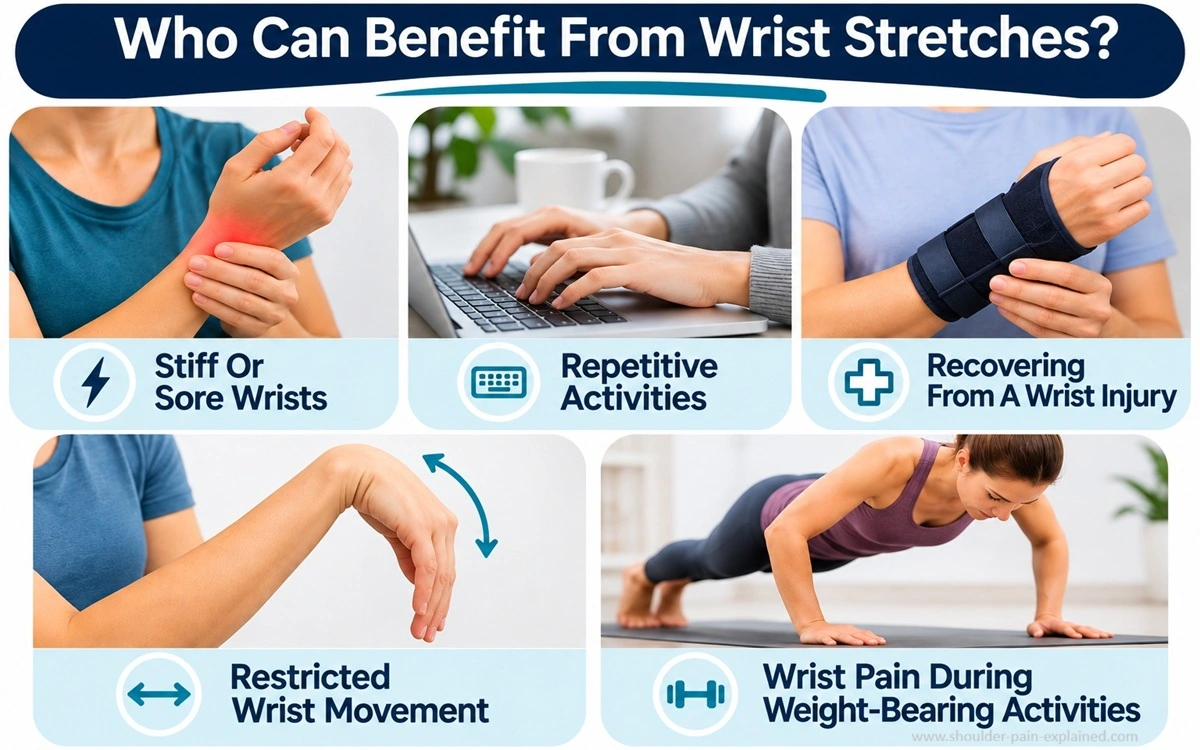
Wrist stretches can help ease stiffness, improve flexibility and make everyday wrist movements and activities more comfortable. They may be particularly useful if you:
- Have Stiff Or Sore Wrists: Your wrists feel stiff first thing in the morning, after periods of inactivity or following everyday activities
- Do Lots Of Repetitive Activities: You spend a lot of time typing, driving, using tools or performing repetitive gripping movements, which can leave your wrists and forearms feeling tight or achy
- Are Recovering From A Wrist Injury: You have been cleared to start exercising following a wrist sprain or fracture and want to regain your movement
- Have Restricted Wrist Movement: You find it difficult or uncomfortable to bend your wrist backwards, forwards or from side to side
- Get Wrist Pain During Weight-Bearing Activities: Your wrists hurt when leaning through your hands, such as during press-ups, bench pressing or pushing yourself up from a chair
Wrist stretch exercises typically work best when combined with wrist strengthening exercises to ensure good stability, strength and control.
How To Stretch Your Wrist
The wrist stretches in this guide are divided into two stages so you can choose the best starting point.
- Stage 1 focuses on gentle, supported wrist mobility exercises. These are particularly useful if your wrist is particularly stiff or you are returning to movement after an injury or period in a cast
- Stage 2 progresses to more targeted wrist and forearm stretches to improve flexibility and joint mobility
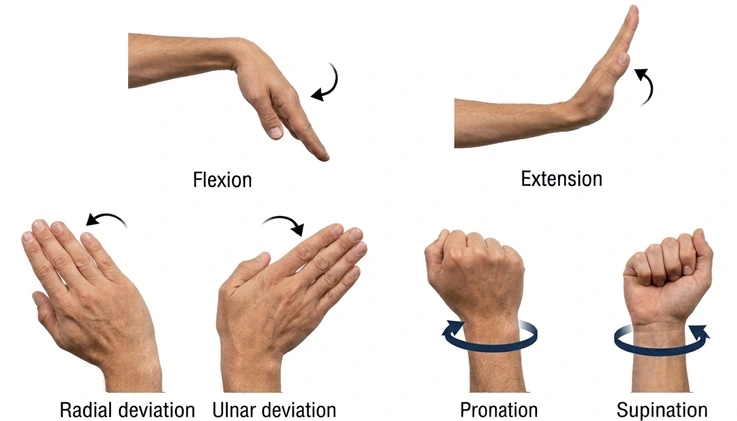
They cover each of the different movements of the wrist, flexion, extension, pronation, supination, radial and ulnar deviation.

If you have recently had wrist or hand surgery, a fracture or a significant wrist injury, check with your treating clinician before starting. You may need to follow specific movement restrictions.
Best Stretches For Wrist Pain
These wrist stretch exercises work on the different movements of the wrist, helping to improve flexibility, restore mobility and ease stiffness.
If you are wondering how to stretch your wrist safely, the exercises are divided into two stages. Stage 1 uses gentle, supported movements to get the wrist moving, while Stage 2 progresses to more targeted wrist and hand stretches.
You do not necessarily need to do every exercise. Choose the movements that address your particular restrictions and symptoms, starting with the exercises that feel most comfortable.
Stage 1: Gentle Wrist Mobility Exercises
These are a great place to start after a wrist fracture, injury or surgery, once you have been cleared to move the wrist.
The hand is supported throughout, so you can work on restoring movement without having to hold your arm up or pull forcefully on the wrist.
1. Wrist Flexion And Extension
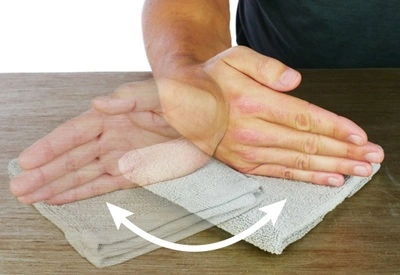
- Rest
the side of your hand on a small towel so that your thumb points towards
the ceiling
- Bend
your wrist backwards and forwards as you slide the towel across the table
- Spend
about 1-2 minutes doing this
The towel helps reduce friction, allowing your hand to slide more easily as you move your wrist.
2. Radial And Ulnar Deviation
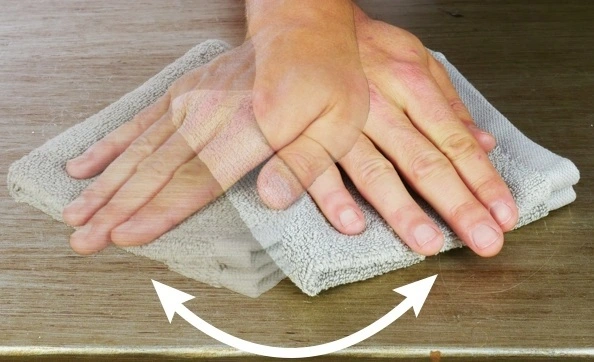
- Rest
the palm of your hand on a small towel
- Bend
your wrist from side to side as you slide the towel across the table, like
a windscreen wiper action
- Spend 1-2 minutes doing this
This exercise works on the sideways movements of the wrist, helping to restore movement towards the thumb and little finger sides.
3. Card Flip Rotation

- Hold
a deck of cards in one hand
- Flip
over one card at a time and stack the cards on the table
- Continue until you have turned over the deck
This exercise works on forearm rotation, moving between pronation and supination. These movements are important for everyday tasks such as turning a door handle or using cutlery.
4. Towel Wrings
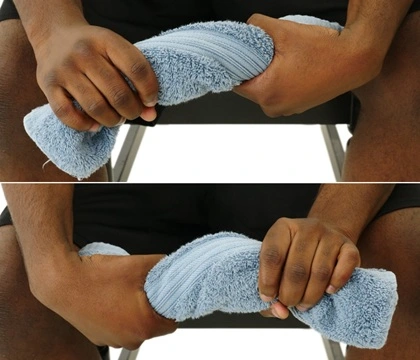
- Sit
with your forearms resting on your thighs and grasp
the ends of a hand towel
- Twist
your hands in opposite directions, as if you are wringing out a towel
- Then
twist back round the other way
- Spend 30-60 seconds doing this
This gently works on forearm rotation while encouraging movement through the wrist and hand.
Stage 2: Wrist Stretch Exercises
Most people will be able to start with these exercises if they already have reasonable wrist movement. However, if you have just come out of a cast following an injury or surgery, start with Stage 1 unless you have been advised otherwise.
The first two exercises help to warm up the wrist and get the synovial fluid pumping in the joint to loosen it up and warm up the muscles before progressing to more targeted stretches for wrist pain.
Don't worry if you hear a few painless pops or cracks as your wrist loosens up. However, clicking accompanied by pain, swelling or a feeling of instability should be assessed.
1. Wrist Flexion/Extension
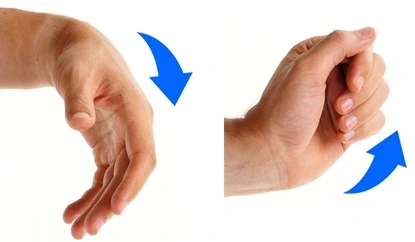
- With your palm facing down, bend your wrist down as far as is comfortable
- Then bend your wrist as far back as is comfortable
- Work in a pain-free range bending up and down for 30-60 seconds
2. Wrist Circles

- Rotate your wrist in a circular motion
- Perform a few clockwise revolutions and then rotate counter clockwise
- Spend 30-60 seconds doing this, frequently changing direction
Top Tip: start with small circles and gradually make them bigger as your wrist loosens up
3. Wrist Traction
This exercise gently applies a pulling force through the wrist, which can help ease feelings of compression and stiffness. It can really help to off-load the joint
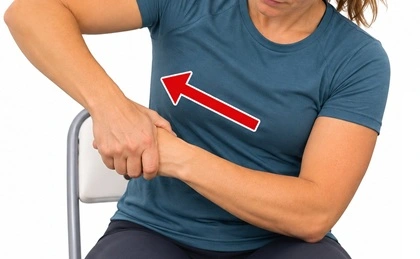
- Sit comfortably resting your elbow on your thigh
- Grasp your hand with the opposite hand, just past the wrist
joint
- Gently pull your hand straight away from your forearm to
create a comfortable traction stretch
- Hold for 15-20 seconds and repeat 3-5 times
Variations: while maintaining the gentle traction, gently rotate the forearm or bend the wrist up and down to get some extra stretch
Safety Advice: Avoid this exercise if you have had a recent wrist injury or surgery unless your treating clinician has specifically advised that it is suitable.
4. Prayer Stretches
Prayer wrist stretch exercises help improve wrist joint range of motion while stretching the wrist flexor and extensor muscles.

- Start by placing your palms together in front of your face, with your fingers pointing upwards
- Slowly lower your hands in front of your chest, keeping your palms together
- Hold for 15-20 seconds
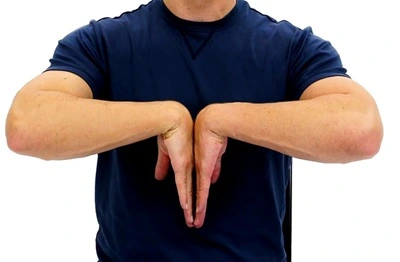
- Next,
perform a reverse prayer stretch by placing the backs of your hands
together, with your fingers pointing towards the floor
- Gently
lower your elbows while keeping the backs of your hands together.
- Hold
for 15-20 seconds
- Keep alternating between the prayer stretch and reverse prayer stretch 3-5 times each way.
5. Wrist Extension Stretch
This wrist extension stretch improves your ability to bend your wrist backwards while stretching the wrist flexor muscles along the front of your forearm.
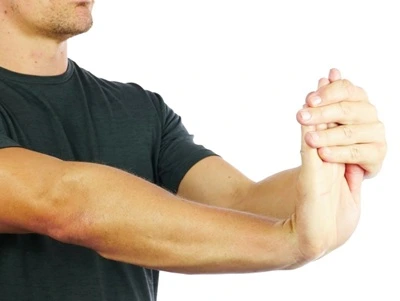
- Stretch
your arm out in front of you with your elbow straight and palm facing down
- Bend
your hand backwards and grasp around your fingers with your other hand
- Gently
pull your fingers back towards you until you feel a stretch down the front
of your forearm
- Hold for 20 seconds. Gently shake your wrist to relax it, then repeat 3-5 times
6. Wrist Flexion Stretch
This wrist and hand stretch improves wrist flexion while targeting the wrist extensor muscles along the back of your forearm.
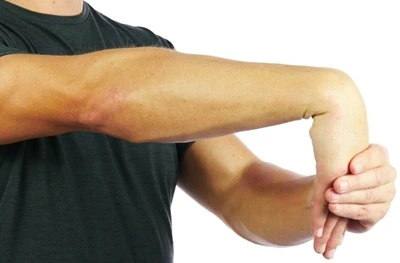
- Stretch
your arm out in front of you with your elbow straight and palm facing down
- Grasp
around the back of your fingers with your other hand
- Bend
your wrist forwards and gently push your fingers towards your hand/forearm
- Feel
a stretch down the back of your forearm and across the back of your wrist
- Hold for 20 seconds, gently shake your wrist to relax it and repeat 3-5 times
7. Outer Wrist Stretch
This stretch targets the thumb extensor muscles and other soft tissues along the outer side of the wrist.
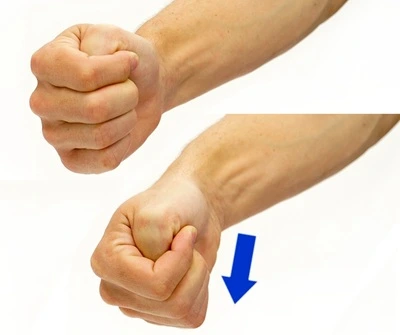
- Stretch
your arm out in front of you with your elbow straight and thumb pointing
towards the ceiling
- Make
a fist with your thumb tucked under your fingers
- Gently
bend your wrist downwards towards the floor
- You
should feel a stretch down the thumb side of your wrist
- Hold for 20 seconds, relax and repeat 3-5 times
You should feel a gentle stretch rather than sharp pain. Don't force your wrist into position, particularly if you have pain around the thumb side of your wrist.
Benefits Of Wrist And Hand Stretches
The best wrist stretch exercises are those that help address your particular restrictions and symptoms. When performed regularly and comfortably, wrist and hand stretches may offer several benefits:
1. Improve Wrist Flexibility
Stretching helps maintain and improve the flexibility of the muscles and other soft tissues around the wrist, making it easier to bend your wrist forwards, backwards and from side to side.
2. Reduce Stiffness
Gentle wrist movements help ease joint stiffness, particularly after periods of inactivity, immobilisation or wrist fractures. This can make everyday activities such as getting dressed, cooking and using a keyboard more comfortable.
3. Improve Forearm Mobility
Many of the muscles that control wrist and hand movements run along the forearm. Forearm and wrist stretches help maintain flexibility in these muscles, allowing your hand and wrist to move more freely.
4. Make Everyday Activities More Comfortable
Improving wrist mobility may make activities involving gripping, lifting, pushing up and reaching more comfortable, particularly if restricted movement is contributing to your symptoms.
5. Support Recovery After Injury
Once your wrist has healed sufficiently and you have been cleared to exercise, gentle stretching can help restore movement following injuries such as wrist sprains and fractures.
Remember, stretching is just one part of looking after your wrists. If you want to improve wrist strength and stability as well, take a look at my guide to Wrist Strengthening Exercises.
What Conditions Can Wrist Stretches Help With?
Wrist stretches and mobility exercises can help improve flexibility, maintain movement and ease stiffness, particularly after an injury has healed or when a joint feels restricted.
Wrist pain can develop for several reasons and understanding what is causing your symptoms is important, as some conditions respond better to stretching than others, such as:
Wrist Sprains
A wrist sprain occurs when the ligaments supporting the wrist are overstretched or torn, usually following a fall or sudden twisting movement. Symptoms typically include pain, swelling and difficulty moving or putting weight through the wrist.
Wrist Fractures
A wrist fracture, particularly a distal radius fracture, can cause pain, swelling and bruising. The wrist often becomes stiff after spending several weeks in a cast or splint, with movement taking time to return after the fracture has healed. Find out more in the Wrist Fractures article.
Repetitive Strain Injuries
Repeated movements involving typing, gripping, lifting or using tools can irritate the muscles and tendons around the wrist. This can lead to aching, tightness and pain that tends to worsen during or after repetitive activities.
Wrist Arthritis
Arthritis can cause pain, stiffness and reduced movement in the wrist joint. A common feature is stiffness first thing in the morning or after periods of rest, which may ease as the wrist starts moving.
Tendon Problems Around The Wrist
Tendon problems can cause pain around the wrist or thumb, particularly when moving the affected area. For example, De Quervain’s Tenosynovitis affects the tendons on the thumb side of the wrist, often causing pain when gripping, lifting or moving the thumb.
Tennis Elbow
Tennis elbow causes pain on the outside of the elbow, often extending down the forearm towards the wrist. It involves irritation of the tendons that attach the wrist extensor muscles to the outer elbow. Pain is often worse when gripping, lifting or extending the wrist against resistance. Find out more in the Tennis Elbow article.
Safety Advice With Wrist Stretches
It is important not to stretch through pain or assume that stretching is appropriate for every wrist condition. For example, a recent sprain or fracture needs time to heal, while certain tendon problems can be aggravated by wrist stretch exercises. If you have persistent pain, it is worth getting the cause assessed so you can choose the most appropriate exercises.
If you are unsure what is causing your symptoms, take a look at our Wrist Pain Chart, which explores the different causes of wrist pain according to where you feel it and the associated symptoms.
Tips For Getting The Most From Your Wrist Stretches
To get the best results from your wrist stretch exercises, keep these points in mind:
- Start Gently: Begin with small, comfortable movements and gradually increase the range as your wrist loosens up
- Don't Force The Stretch: You should feel a gentle pulling sensation, not sharp pain or pinching in the wrist
- Keep Moving Regularly: A little gentle movement throughout the day is often more useful than doing lots of stretching in one session
- Breathe Normally: Avoid holding your breath or tensing your shoulders and forearms while stretching
- Be Consistent: Improvements in flexibility generally take time, so aim to practice regularly rather than expecting immediate results
If your wrist becomes increasingly painful, swollen or stiff after doing stretches for wrist pain, ease back and get advice from a healthcare professional.
FAQs For Wrist Stretches
1. Do Wrist Stretches Help With Wrist Pain?
1. Do Wrist Stretches Help With Wrist Pain?
Yes, stretches for
wrist pain can help ease discomfort when symptoms are related to muscle
tightness, restricted movement or joint stiffness.
They help maintain flexibility and improve wrist mobility. However, stretching will not resolve every cause of wrist pain, so it is important to choose exercises that are appropriate for your particular problem.
2. How Often Should I Stretch My Wrists?
2. How Often Should I Stretch My Wrists?
You can generally perform gentle wrist and hand stretches once or twice a day, depending on your symptoms and how your wrist responds. Start with a few repetitions of each exercise and gradually build up.
If your wrist becomes more painful or swollen after stretches for wrist pain, reduce the amount of stretching e.g. don't push as far, reduce the number of repetitions, reduce the hold time of each stretch.
3. Should I Stretch My Wrist If It Hurts?
3. Should I Stretch My Wrist If It Hurts?
It depends on what is causing the pain. Gentle movements within a comfortable range may help if your wrist feels stiff or tight. However, you should not force a stretch or push through sharp or increasing pain.
If you have recently injured your wrist or have significant swelling, get it assessed before starting stretching exercises for wrist pain.
4. What Are The Best Wrist Stretches For Office Workers?
4. What Are The Best Wrist Stretches For Office Workers?
Office workers often spend long periods typing, using a mouse or performing repetitive hand movements, which can leave the wrists and forearms feeling stiff and tight.
Some of the best wrist stretches for office workers include wrist flexion and extension stretches, prayer stretches and gentle wrist circles. These help maintain wrist mobility and stretch the muscles running along the forearm.
Try taking short movement breaks throughout the day rather than waiting until your wrists start to ache. Gently moving your wrists, opening and closing your hands and changing position regularly can all help reduce stiffness.
5. What Wrist Stretches Help With Carpal Tunnel Syndrome?
5. What Wrist Stretches Help With Carpal Tunnel Syndrome?
Carpal tunnel syndrome occurs when the median nerve is compressed at the wrist, causing symptoms such as tingling, numbness and pain in the hand.
Gentle wrist and hand movements can help maintain mobility, but there is limited evidence that traditional wrist stretches relieve carpal tunnel syndrome. Some nerve-gliding exercises, which gently encourage the median nerve to move through the wrist, may be more appropriate.
Avoid forcing your wrist into extreme bending positions, as this can increase pressure within the carpal tunnel and aggravate symptoms. If you have persistent numbness, tingling or weakness, seek advice from a healthcare professional. Find out more about Carpal Tunnel Syndrome.
Best Wrist Stretches Summary
Stretches for wrist pain are a simple way to improve flexibility, maintain joint mobility and ease stiffness around the wrist and forearm. They work best when combined with wrist strengthening exercises.
Whether your wrists feel tight after repetitive activities, have become stiff following an injury or hurt when you bend them, the wrist stretch exercises in this guide provide a good starting point.
Start with gentle movements, gradually progress to the more targeted forearm and wrist stretches and keep things comfortable. You don't need to do every exercise; focus on the movements that help address your particular restrictions.
Regular practice can help you regain movement and make everyday activities easier so keep going with your exercises for wrist pain, they will make a difference.
You may also be interested in the following articles:
- Wrist Pain Diagnosis Chart
- Hand Pain Diagnosis Chart
- Wrist Lumps & Bumps
- Wrist Tendonitis
- Wrist Fractures
- Wrist Strengthening Exercises
Related Articles

Shoulder Diagnosis
September 23rd, 2026

Wrist Diagnosis
May 12th, 2026
Elbow Diagnosis
February 26, 2026
Medical & Scientific References
- Evaluation of Static Progressive Stretch for the Treatment of Wrist Stiffness. The Journal Of Hand Surgery
- Acute Effects of Static Stretching on Handgrip Strength and Wrist Joint Flexibility in Physically Active Older Women. Human Kinetics Journal
- Effects of Mobile Application-Based Wrist Stretching on Grip Strength and Function in Young Adults. Journal Of Korean Society Of Physical Medicine
- Wrist Exercises. Royal United Hospitals Bath NHS Foundation Turst
Page Last Updated: November 12th, 2026
Next Review Due: November 12th, 2028

Visitor Comments
"Such an informative and valuable site. Clearly written and matches the guidance from my orthopedic surgeon. Even offers many rehab exercises. Thank you very much!" Izabela
"I am a massage therapist and found your website perfect. Very useful. Clear, easy understand. Big help. Thank you!" Viktoria
"This is a great site. Very informative" Marilyn
"I benefited a lot from your distinguished work, thank you." Sayed
"Hi
and thanks so much, great site! You
are doing a lot of good in the world with this helpful site, thanks again." Karen
The material on this website is intended for educational information purposes only. It should not delay or substitute medical advice, diagnosis or treatment. See our T&C's
Shoulder-Pain-Explained.com is a trading name of Wilson Health Ltd. All rights reserved. Terms & Conditions apply
© shoulder-pain-explained.com 2015-26 Last updated 12th November 2026
Contact Us About Us Blog Privacy Policy Advertising Policy Sitemap
