- Home
- Finger Pain
- Trigger Finger
- Exercises
Trigger Finger Exercises:
Improve Movement
& Relieve Pain
Written By: Chloe Wilson BSc (Hons) Physiotherapy
Reviewed By: SPE Medical Review Board
Trigger finger exercises can help improve finger movement, maintain flexibility and reduce stiffness if you have a finger that catches, clicks or locks when bending or straightening.
The best exercises for trigger finger include tendon glides, finger stretches and gentle hand mobility exercises that encourage the tendons to move more smoothly.
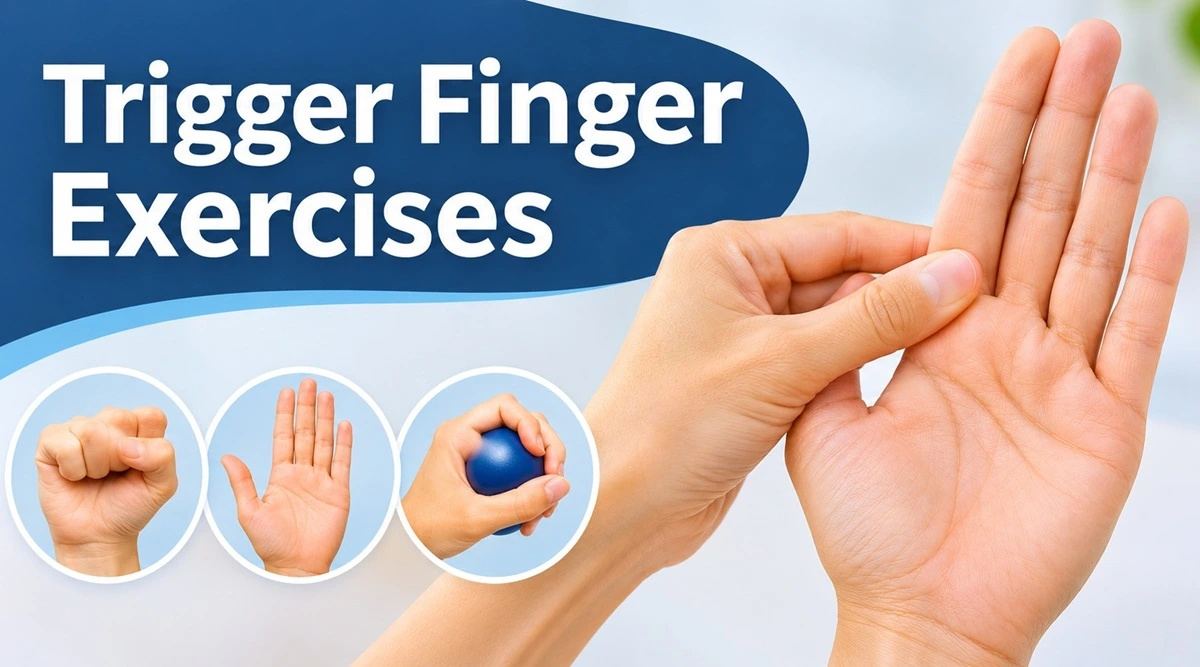
In this guide, I will show you six effective exercises for trigger finger that you can try at home. These exercises focus on improving tendon movement, stretching the finger joints and maintaining hand strength.
I will also explain how to put together a simple trigger finger workout, how often to perform the exercises and what else you can do as part of your trigger finger self-care routine.
How Can Exercises Help Trigger Finger?
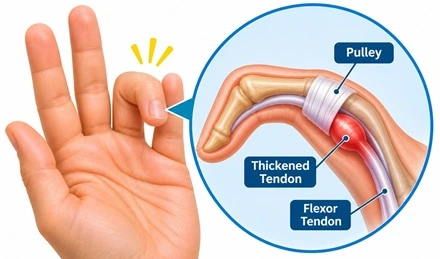
Trigger finger affects the flexor tendons that bend your fingers.
When these tendons become restricted as they pass through their surrounding tendon sheaths, finger movement can become difficult.
The classic presentation is gradual curling of one or more of your fingers and there may be a small lump at the finger base.
Exercises for trigger finger aim to encourage smooth tendon movement, maintain joint flexibility and reduce stiffness.
Tendon gliding exercises are particularly useful because they move your fingers through different positions, encouraging the flexor tendons to glide through their normal range. Finger stretches can also help maintain joint mobility, while gentle strengthening exercises help preserve general hand function.
6 Best Trigger Finger Exercises
The trigger finger workout below does not require any specialist equipment, and all the exercises can be done at home.
Start gently and only perform movements that feel comfortable. You do not need to complete every exercise if certain movements aggravate your symptoms.
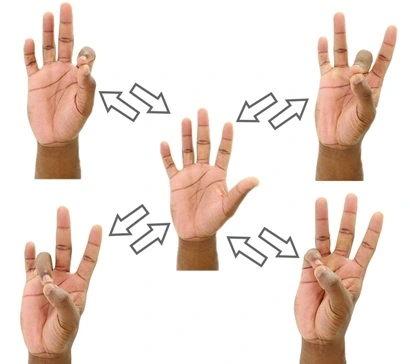
1. Tendon Glides
Tendon gliding exercises move your fingers through different positions to encourage smooth movement of the flexor tendons.
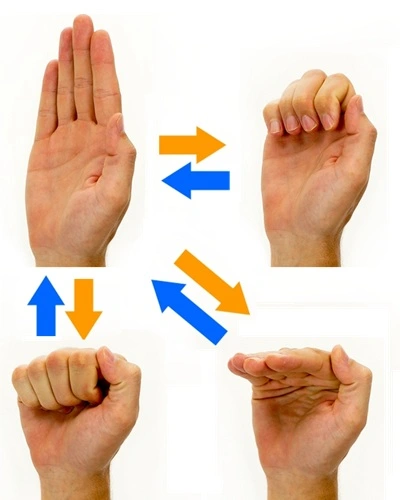
- Hook
Fist: Bend your fingers into a claw position so your fingertips curl
towards the base of your fingers, then straighten them again
- Tabletop
Position: Bend your fingers into an L shape, keeping the middle and end
joints straight while bending only the large knuckles where your fingers
join your hand, then straighten again
- Full
Fist: Bend your fingers into a full fist, curling all the finger joints
inwards, then open your hand again
- Repeat the sequence 5–15 times
Tips: Move slowly and smoothly between positions. Do not force your fingers into a position that causes significant pain or makes them lock.
2. Finger Flexion Stretch
This exercise gently stretches each finger joint individually to improve flexibility when bending your fingers.
- Grasp the finger just above and below the top knuckle (DIP joint)
and gently push the fingertip forwards, keeping the joints below straight - Move your grip to just above and below the middle knuckle (PIP joint) and gently bend the middle joint while keeping the joint below straight
- Grasp the finger just above the main knuckle (MCP joint) and gently bend this joint forwards while keeping the rest of the finger straight
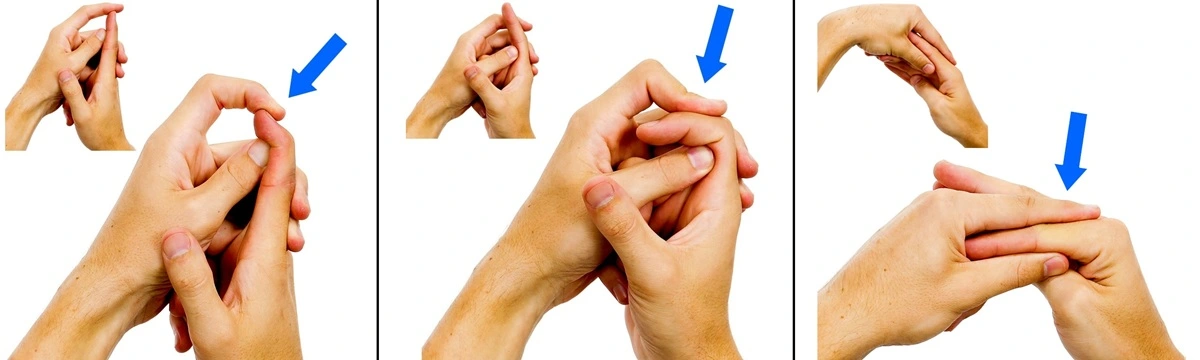
- Repeat the sequence on the other fingers and thumb
- Complete the whole cycle 5–15 times
Tips: Aim to bend one joint at a time rather than curling the whole finger. Use your other hand to guide the movement gently, without forcing the joint.
3. Finger Extension Stretch
This exercise stretches each finger joint and the flexor tendon in the opposite direction to improve your ability to straighten your fingers fully.
- MCP
Stretch: Hold the finger just above the lowest knuckle and gently
straighten it backwards into extension
- PIP
Stretch: Hold the finger above the middle knuckle and gently
straighten it backwards at the middle joint
- DIP
Stretch: Hold the finger above the top knuckle and gently straighten
the fingertip backwards
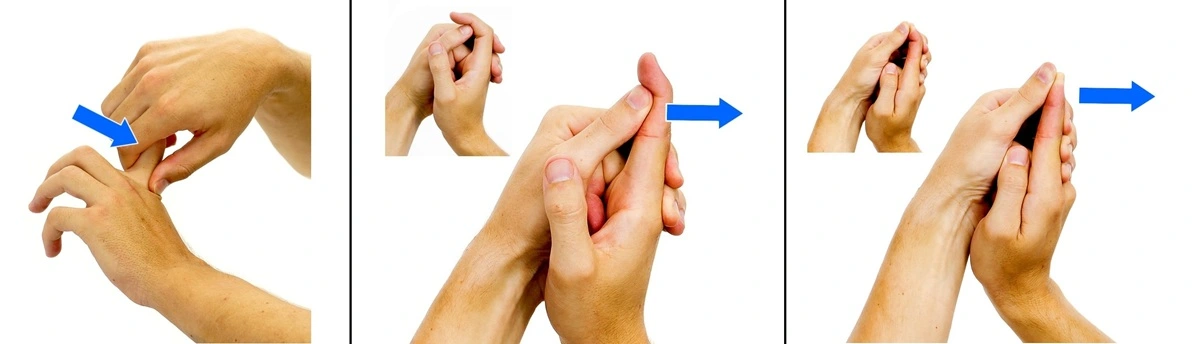
- Hold each stretch for 3–5 seconds
- Work through the joints and alternate between fingers, repeating the sequence 5–15 times
Tips: Keep the movement controlled and gentle. Avoid pushing the finger into a position that causes sharp pain or increases catching.
4. Finger Trace
Finger tracing encourages coordinated movement between your thumb and fingers while helping to maintain thumb and finger mobility and improves tendon glide.
- Touch the tip of your thumb to the tip
or pad of your index finger
- Keeping your thumb in contact with your
finger, slowly slide it down towards the base of the finger
- Repeat the movement on your middle finger, ring finger and little
finger
- Repeat the whole sequence 5–15 times
5. Finger Spreading
This exercise works the small muscles between your fingers to maintain finger mobility and hand coordination.
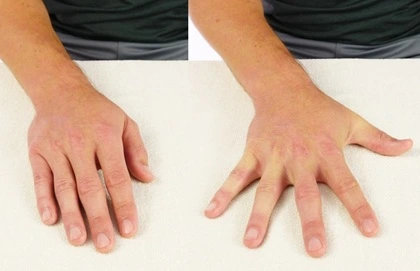
- Place your hand flat on a table with your palm facing downwards and your
fingers together
- Slowly spread your fingers apart as wide
as you comfortably can
- Bring your fingers back together and repeat 10–15 times
Tips: Keep your palm resting on the table throughout the movement. Try to spread all your fingers evenly rather than moving them individually.
6. Ball Pancake
This exercise gently strengthens the muscles in your hand and helps maintain general hand function.
You will need a soft, elastic ball, such as a racket ball or soft tennis ball.
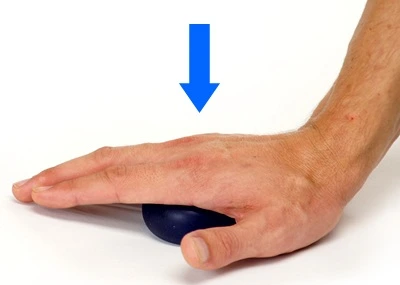
- Place the ball on a table and rest your palm on top of it
- Slowly press down through your palm,
squashing the ball against the table
- Hold the pressure for 3–5 seconds then relax
- Repeat 10–25 times
Tips: Use gentle pressure rather than squeezing as hard as possible. If this exercise aggravates your trigger finger, leave it out.
Maintaining as much comfortable movement as possible is important for everyday hand function. Trigger finger exercises cannot guarantee a cure, particularly if the tendon is significantly thickened or the finger regularly locks. However, gentle movement can help maintain flexibility and hand function.
How Often Should You Do Trigger Finger Exercises?
With trigger finger, it is generally better to do a small number of gentle exercises regularly than to try to complete lots of repetitions in one go.
As a starting point, try performing your chosen exercises once or twice a day, gradually building up if your finger tolerates them well. You may need to adjust this depending on how your symptoms respond.
A few things to bear in mind:
- Start with fewer repetitions and gradually increase as your movement improves
- Perform the exercises slowly rather than rushing through them
- Spread your exercises throughout the day if your hand becomes tired
- Avoid repeatedly testing your finger by making a tight fist or deliberately trying to make it click
- Reduce the number of repetitions if your symptoms become more noticeable afterwards
You do not need to push through pain to get benefits from these movements. The aim of your trigger finger workout is to maintain comfortable movement, not to force your finger to work harder.
Trigger Finger Self Care: What Else Can Help?
Exercises are an important part of trigger finger self-care, but there are other simple measures that may help reduce irritation and make everyday activities more comfortable.
If you are wondering how to treat trigger finger at home, combining appropriate exercises with a few changes to your daily activities may help manage your symptoms.
- Activity Modification: Reduce repetitive gripping and forceful squeezing, particularly if these activities aggravate your symptoms. Take regular breaks and avoid holding objects tightly for prolonged periods
- Gentle Massage: Lightly massage the fleshy area of your palm just below the affected finger using small circular movements. Avoid applying excessive pressure over painful areas
- Night Splinting: Wearing a splint that keeps your affected finger relatively straight while you sleep may help reduce morning stiffness and prevent overnight locking. A healthcare professional or hand therapist can advise on suitable splints
These simple changes may make everyday activities more comfortable while your finger settles. If it continues to lock or is becoming increasingly painful, it is worth getting it assessed.
For more information about how to treat trigger finger, including the different medical treatment options available, see my main guide to Trigger Finger.
How Long Do Trigger Finger Exercises Take To Work?
How quickly you notice a difference from trigger finger exercises varies from person to person.
Some people notice improvements in finger movement and stiffness after a few weeks of regularly performing gentle exercises. Others find that their symptoms persist despite following an exercise programme. There is no guaranteed timeframe, and some cases will need additional treatment.
How quickly you improve depends on several factors, including how long you have had trigger finger, the severity of your symptoms, your age and how much tendon restriction is present.
It is important to remember that exercises for trigger finger are primarily aimed at maintaining movement and reducing stiffness. They do not necessarily reverse the underlying changes in the tendon or tendon sheath.
If your finger continues to lock, becomes increasingly painful or does not improve, you may need additional treatment. You can find out more in my main guide to Trigger Finger.
Frequently Asked Questions
1. What Is The Medical Name For Trigger Finger?
1. What Is The Medical Name For Trigger Finger?
The medical name for trigger finger is stenosing tenosynovitis. It is a condition affecting the flexor tendons that bend your fingers. Thickening or narrowing around the tendon sheath, commonly at the A1 pulley, makes it harder for the tendon to glide smoothly, causing the finger to catch, click or lock when bending or straightening.
2. Can Trigger Finger Be Cured With Exercises?
2. Can Trigger Finger Be Cured With Exercises?
Exercises can help maintain finger movement, reduce stiffness and improve flexibility, but they cannot guarantee a cure. Mild symptoms may improve with conservative management, including exercises and activity modification. However, more persistent cases may require treatments such as splinting or corticosteroid injections.
Exercises are best viewed as one part of managing the condition rather than a guaranteed standalone treatment.
3. How To Release Trigger Finger When It Gets Stuck?
3. How To Release Trigger Finger When It Gets Stuck?
If your finger gets stuck in a bent position, try relaxing your hand and gently using your other hand to assist it towards a straight position. Do not pull or force it, as this can increase discomfort. If it releases easily, gently move it through a comfortable range. It can help to bathe your hand in warm water to help it relax and gently do your exercises.
If it remains locked, repeatedly locks or becomes increasingly painful, seek medical advice rather than repeatedly forcing it straight.
4. Should You Massage Trigger Finger?
4. Should You Massage Trigger Finger?
Gentle massage around the base of the affected finger and into the palm may help some people manage local discomfort and stiffness. Use your opposite hand to apply light circular pressure, avoiding aggressive rubbing over painful areas.
However, massage does not remove the thickening responsible for tendon restriction, and there is limited evidence that it resolves trigger finger itself. Stop if massage increases pain or irritation.
5. Should Trigger Finger Exercises Hurt?
5. Should Trigger Finger Exercises Hurt?
Trigger finger exercises should not cause significant pain. You may notice a gentle pulling sensation when stretching your fingers or some mild discomfort when moving a stiff joint.
However, sharp pain, increased catching or worsening symptoms afterwards suggest that you may be doing too much.
Reduce the repetitions or leave out any movements that repeatedly aggravate your symptoms.
6. Are Exercises Good For Trigger Thumb?
6. Are Exercises Good For Trigger Thumb?
Yes, gentle tendon gliding and thumb mobility exercises may help maintain movement and reduce stiffness in trigger thumb. These trigger thumb exercises follow similar principles to exercises for trigger finger, although the movements need to be adapted to the thumb's anatomy and movement.
Avoid repeatedly forcing the thumb to bend or straighten if it catches or locks. If symptoms persist or interfere with everyday activities, seek medical advice.
Trigger Finger Exercises Summary
Trigger finger exercises can help maintain finger mobility, improve flexibility and reduce stiffness. Tendon glides and gentle finger stretches are particularly useful for encouraging smooth movement through the finger joints and tendons.
When doing your exercises, remember to:
- Start gently and gradually increase repetitions as your symptoms allow
- Perform your chosen exercises regularly rather than trying to do too much at once
- Avoid forcing your finger through painful or catching movements
- Combine exercises with simple trigger finger self-care measures, such as modifying aggravating activities
- Seek medical advice if your finger continues to lock or your symptoms are not improving
Although exercises for trigger finger can help manage symptoms, they do not work for everyone. If your symptoms persist, additional treatment may be needed to restore comfortable finger movement.
You may be interested in the following articles:
- Hand Pain Diagnosis Charts
- Hand Lumps & Bumps
- Pain In Palm Of Hand
- Dupytren's Contracture
- Wrist Strengthening Exercises
Related Articles
Shoulder Diagnosis
September 23rd, 2026
Wrist Diagnosis
May 12th, 2026
Elbow Diagnosis
February 26, 2026
Medical & Scientific References
- Trigger Finger Management & Advice. Torbay & South Devon NHS Foundation Trust
- From Diagnosis To Rehabilitation Of Trigger Finger: A Narrative Review. BMC Musculoskeletal Disorders
- Clinical effectiveness of Finger gliding Exercise for patients with trigger fingers receiving steroid injection: a Randomized Clinical Trial. Springer Nature Scientific Reports
Page Last Updated: November 18th, 2026
Next Review Due: November 18th, 2028

Visitor Comments
"Such an informative and valuable site. Clearly written and matches the guidance from my orthopedic surgeon. Even offers many rehab exercises. Thank you very much!" Izabela
"I am a massage therapist and found your website perfect. Very useful. Clear, easy understand. Big help. Thank you!" Viktoria
"This is a great site. Very informative" Marilyn
"I benefited a lot from your distinguished work, thank you." Sayed
"Hi
and thanks so much, great site! You
are doing a lot of good in the world with this helpful site, thanks again." Karen
The material on this website is intended for educational information purposes only. It should not delay or substitute medical advice, diagnosis or treatment. See our T&C's
Shoulder-Pain-Explained.com is a trading name of Wilson Health Ltd. All rights reserved. Terms & Conditions apply
© shoulder-pain-explained.com 2015-26 Last updated 17th November 2026
Contact Us About Us Blog Privacy Policy Advertising Policy Sitemap
